Opening
Till open, variance checked
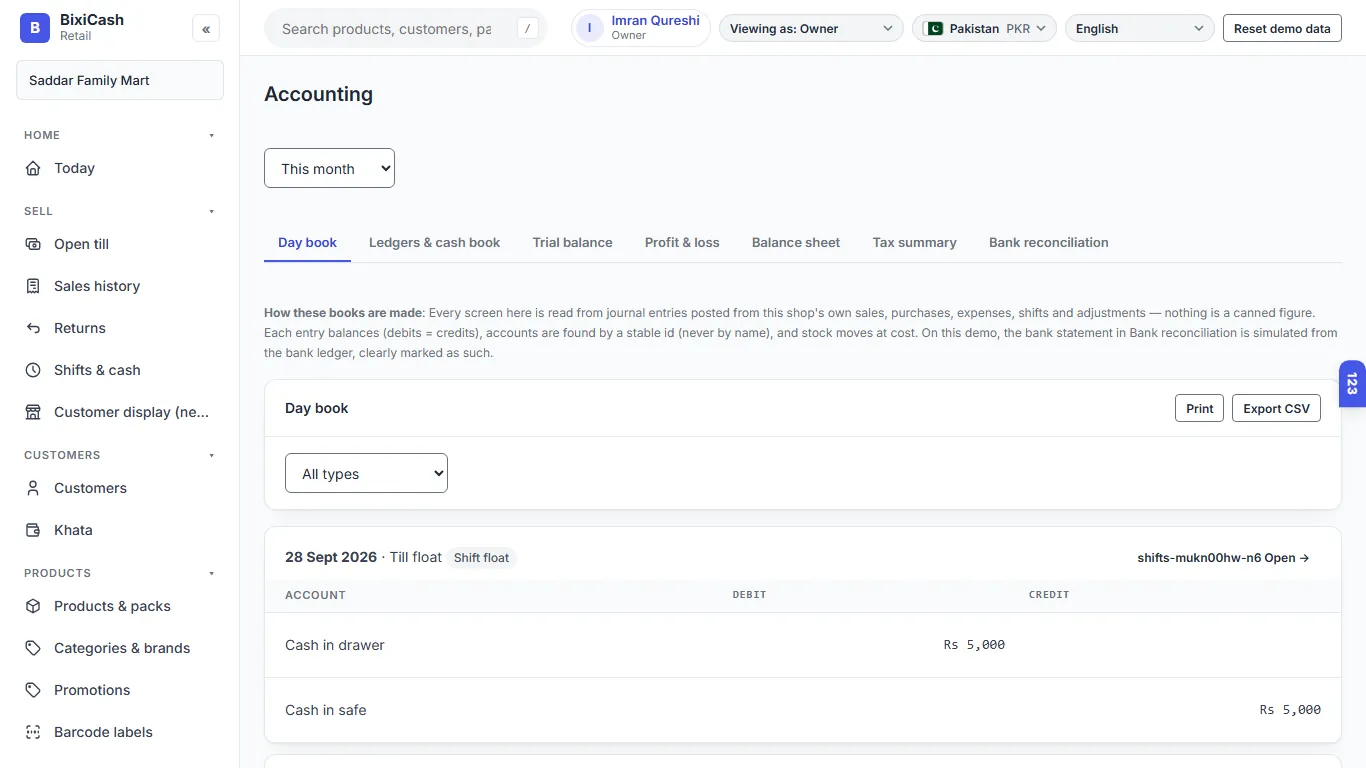
The cashier opens the till and the manager checks that yesterday's counted cash still matches the books.

Live demo Retail & Specialty
Scan fast-moving stock at the till, sell loose staples by quantity, watch dairy before it expires, and keep every regular's khata straight, on one system built for a general store's daily rhythm.
A working day
Opening
The cashier opens the till and the manager checks that yesterday's counted cash still matches the books.
Morning
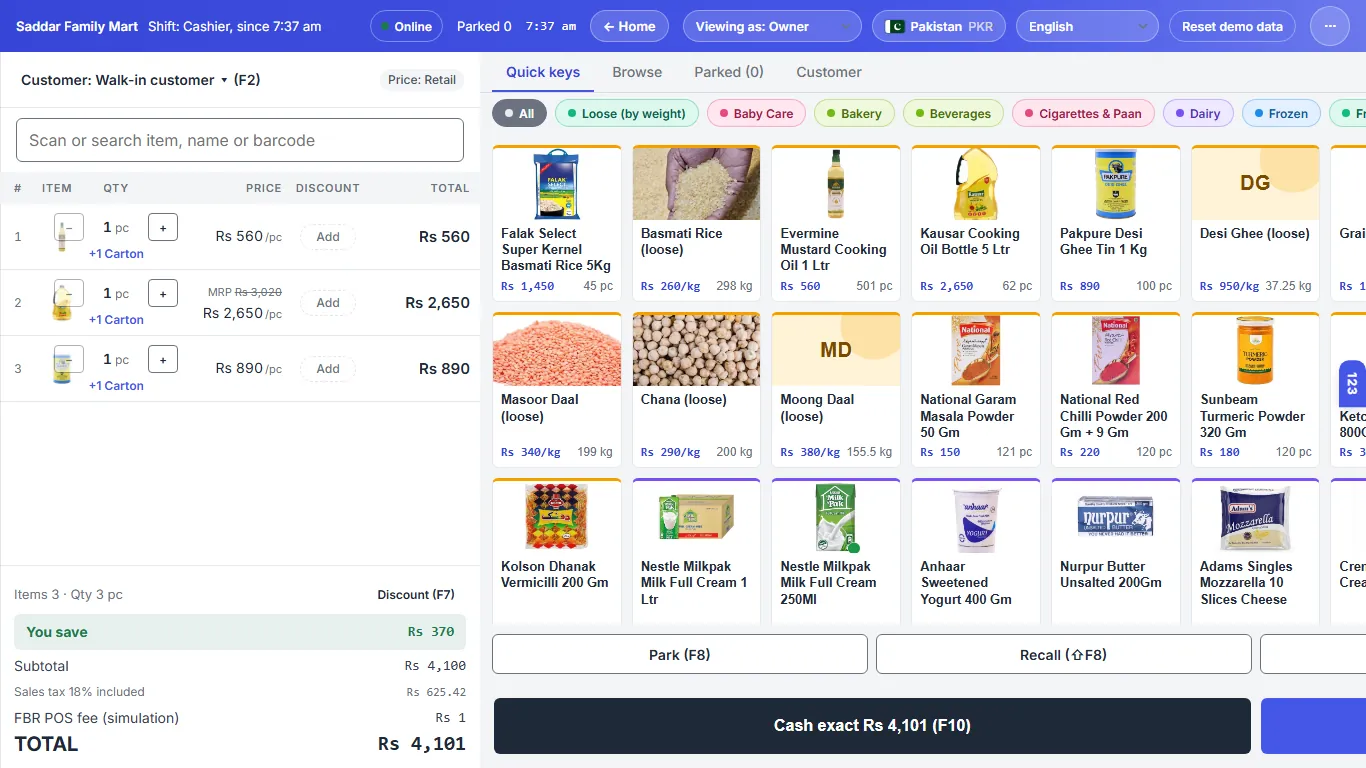
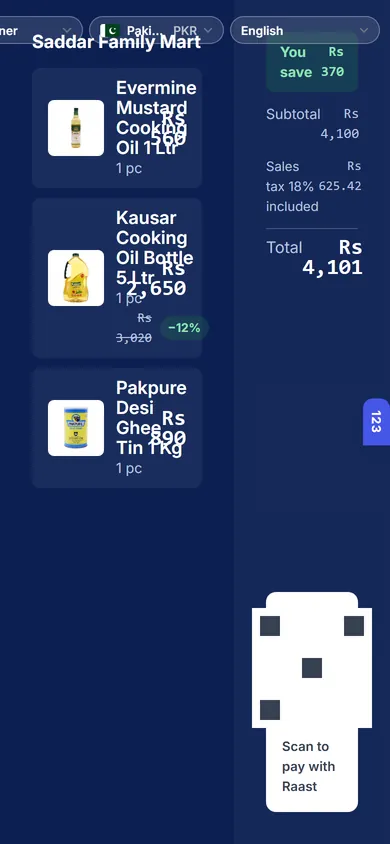
Loose staples such as rice, oil and sugar are sold by quantity alongside packaged FMCG scanned by barcode.
Midday
A regular customer's purchase is added to their running khata balance against their credit limit.
Afternoon
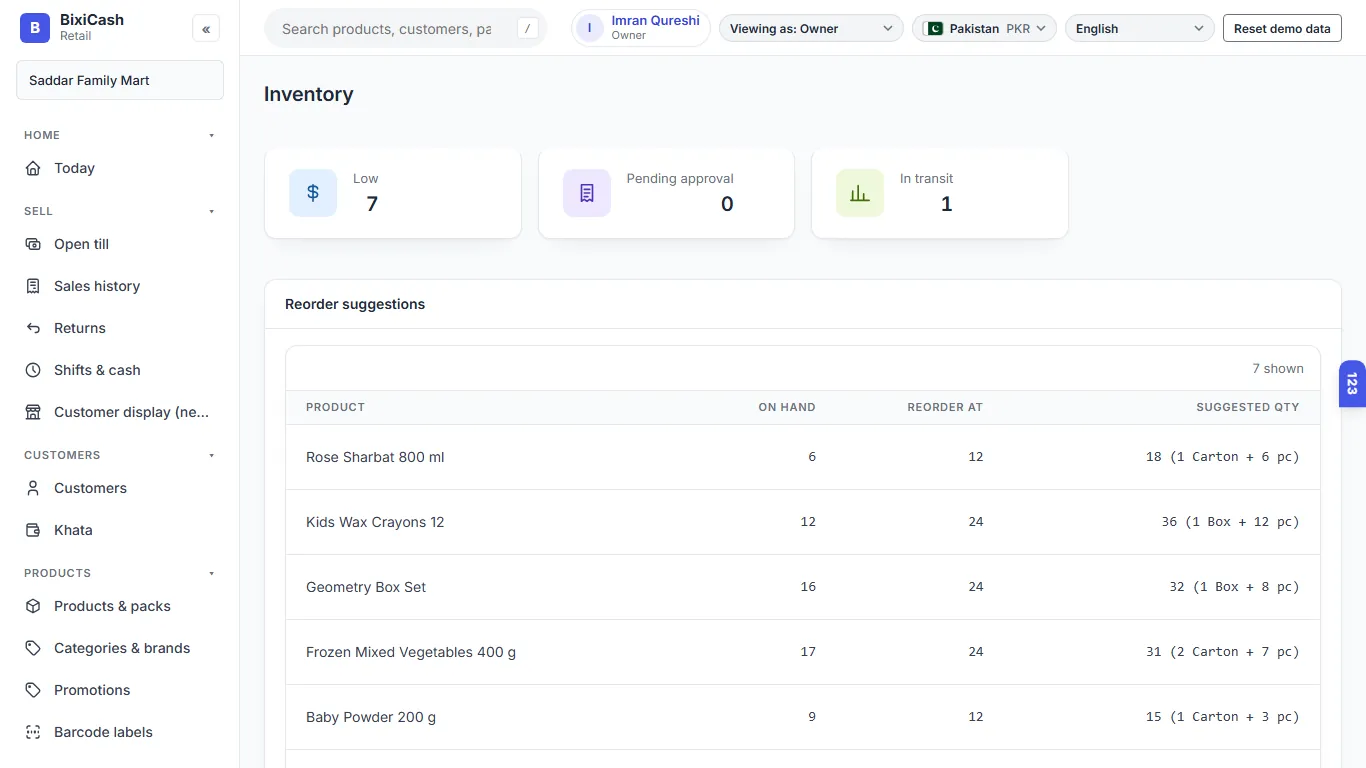
The stock keeper receives a delivery, capturing batch and expiry on dairy and bakery lines, and flags anything nearing its date.
Weekly
A fast-moving line running low at one branch is transferred in from the other, a routine weekly event.
Closing
The owner checks the day's cash variance and the khata ageing before locking up.
What goes wrong today
Dairy and bakery stock that goes off before anyone spots it nearing its date.
A regular customer's running balance that isn't clear until someone totals a notebook at month-end.
A queue building at the till while loose rice, oil or sugar is weighed and priced by hand.
A line that shows in stock on the shelf but is actually sitting at the other branch.
What it does
Parts marked Coming soon are on the way; founding shops get them first, at no extra charge.
Our demo sells the same product as a carton, a box or a single loose unit, each at its own price.
Our demo picks the batch that expires soonest and flags near-expiry stock before it must be written off.
A customer can buy on account. The product tracks the open balance, receipts and ageing behind every khata.
Reading a weighing-scale barcode straight into the sale will let rice, oil and sugar ring up as fast as a packaged item.
A receipt or a khata reminder pre-fills on WhatsApp with one tap; a person still presses send.
Stock is tracked by branch and warehouse, so a shortage on one shelf can be checked against another branch.
A physical stock count reconciles against the books, with a manager's PIN on the adjustment.
A small on-site hub will keep the till selling through an internet outage, so the counter never has to stop.
Inside the product
Who uses it
Owner
Yesterday's cash variance and khata ageing at a glance, from a phone.
Manager
To supervise the floor and approve a stock-count adjustment.
Cashier
To scan fast, ring up loose staples, and take a khata payment without leaving the till.
Stock keeper
To receive stock against batch and expiry, and raise a reorder before a line runs out.
Behind the counter
The screens for your trade sit on a full set of books. These parts come with it.
Double-entry books, statements, period close.
Orders, supplier bills and what you owe.
What you hold, where, and what it cost.
More than one shop, one set of books.
On the counter
Bought together with the software: one delivery, one bill, set up to work.
The price
Introductory price. VAT is added where it applies. A second shop costs the same as the first. Prices for Bangladesh, in BDT, as of 28 Sep 2026.
The first 50 shops in Bangladesh get free setup and data import with a yearly plan, and today's price locked for two years.
Claim a placeStraight answers
Not yet. It is planned: a small on-site hub that keeps the till working through an outage. Today the demo shows how it will work.
Weighing-scale barcodes are planned; today a loose item is entered by quantity at the till.
Yes. Stock is tracked by branch and warehouse in the product; a single combined view across branches is still being wired into the demo.
Yes. That is decided and shown in the demo: a discount can never take a line below cost, and never above the owner's own maximum.
Yes. A customer can buy on account, and the system keeps each khata's running balance and ageing.
Same aisle
Twenty minutes on a call. We show your day on the screen, with your words and your stock.