Opening
Checking the day's numbers
The procurement officer confirms the release-price setting has not changed overnight and checks the mill's remaining quota balance.

Live demo Manufacturing & Process
Weigh a wheat truck in, run one milling batch into atta, maida, suji and chokar, and see what each one actually costs, with the government return ready when asked.
A working day
Opening
The procurement officer confirms the release-price setting has not changed overnight and checks the mill's remaining quota balance.
Morning
A wheat truck is weighed in at the gate, weighed out empty, and the net weight posts against the mill's quota permit, with any moisture deduction entered.
Midday
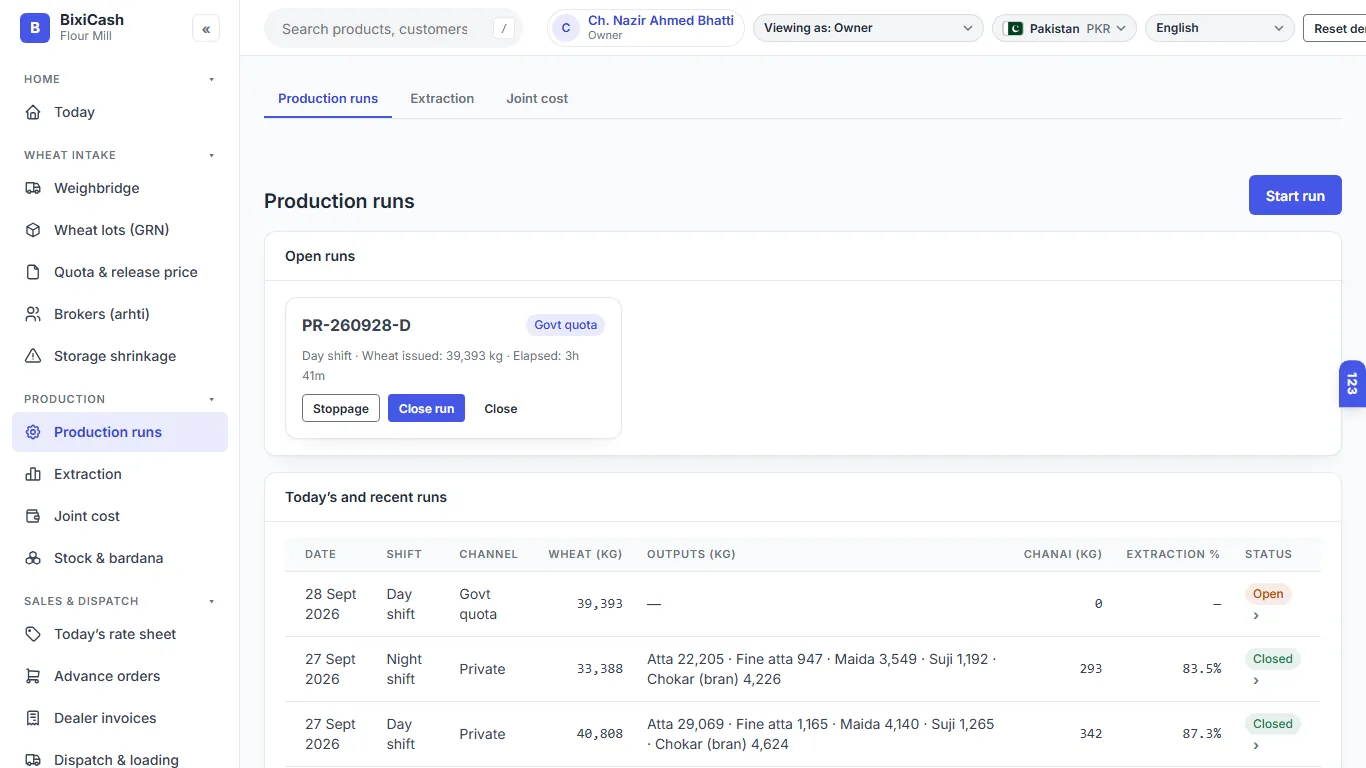
Wheat is issued from a specific lot and milled. The run closes with atta, maida, suji and chokar weighed in separately, and the run's own wastage (chanai) recorded on its own, never folded into the extraction number.
Afternoon
Loads are packed into bags off base-unit stock, bardana (packing bags) consumed against each load, and a dealer buys at today's rate sheet, on khata or cash.
Late afternoon
Bran is sold on to a feed dealer at its own rate, a separate revenue line from the flour it rode alongside.
Evening
The accountant reconciles the day's cash, cheques and bank against dealer payments, and checks the quota-permit balance against what was actually lifted and milled.
What goes wrong today
Working out what atta, maida, suji and chokar each actually cost, from one wheat lot, is normally done in someone's head, not on screen.
Quota wheat and any privately bought lot should stay separate, with their own extraction result, not blended into one wheat bucket.
Chanai (milling loss) is easy to fold silently into the extraction percentage instead of showing as its own figure.
The Appendix-format production return is often assembled the night before an inspection instead of coming straight from the day's own records.
When the government release price changes, the day's dealer rate sheet needs to catch up quickly, not days later.
What it does
Parts marked Coming soon are on the way; founding shops get them first, at no extra charge.
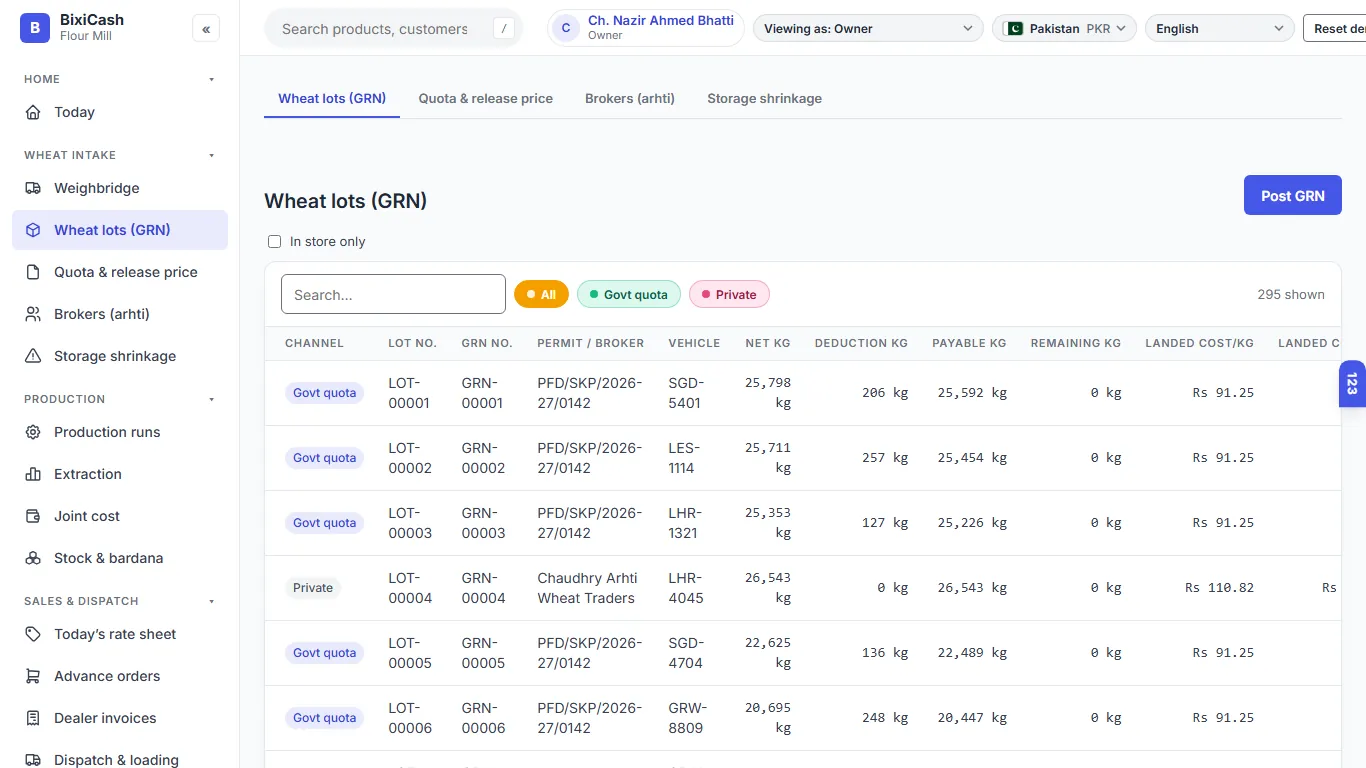
The weighbridge screen takes each truck's first and second weighing, works out the net, applies any moisture deduction, and posts the wheat against the supplier or the mill's quota permit.
Every quota lift and every private or brokered lot is its own wheat lot with its own extraction result, never blended into one bucket. The quota balance and the release price sit on the same screen.
A milling run issues wheat from a chosen lot and closes with atta, maida, suji and chokar weighed in separately. The run's own wastage (chanai) shows on its own line, never hidden inside the extraction figure.
The run's wheat cost splits across atta, maida, suji and chokar by sales value or by weight, shown side by side, so each grade's real cost is on screen, never assumed.
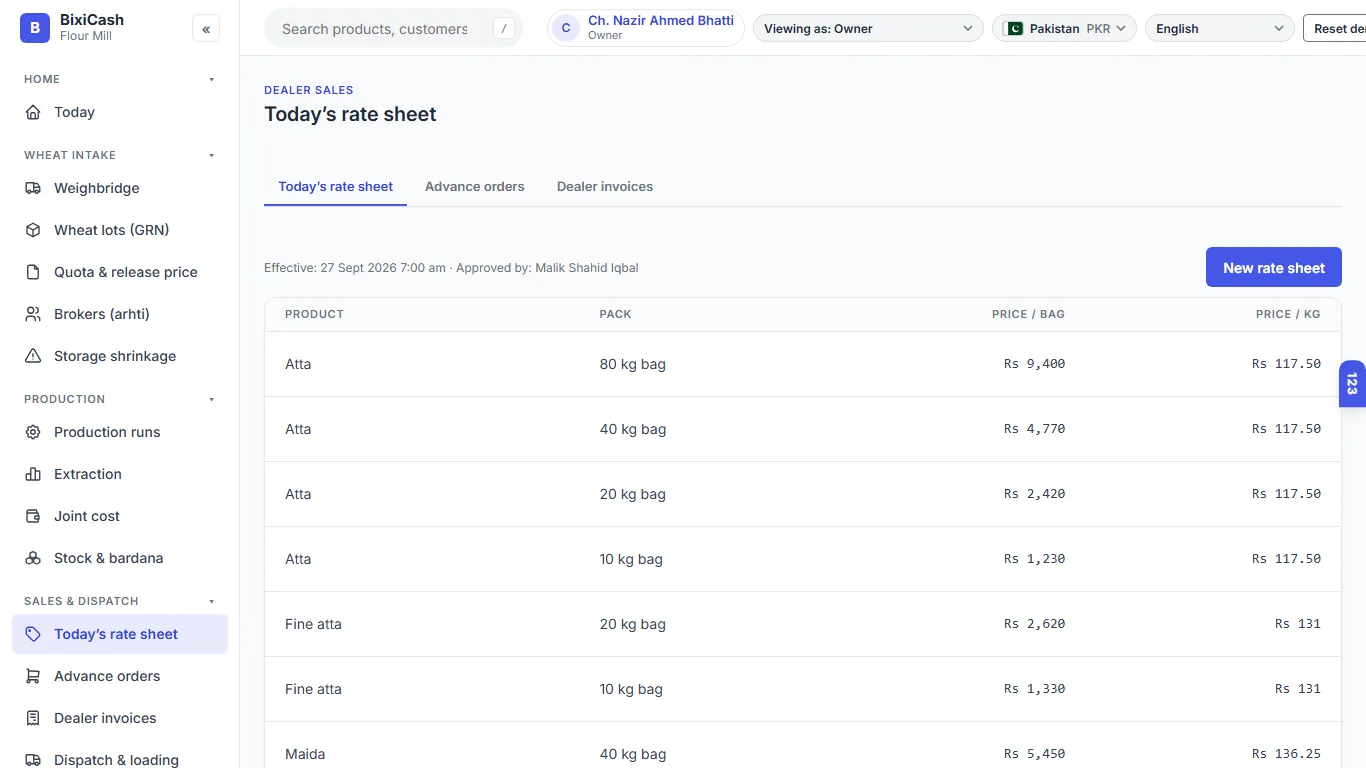
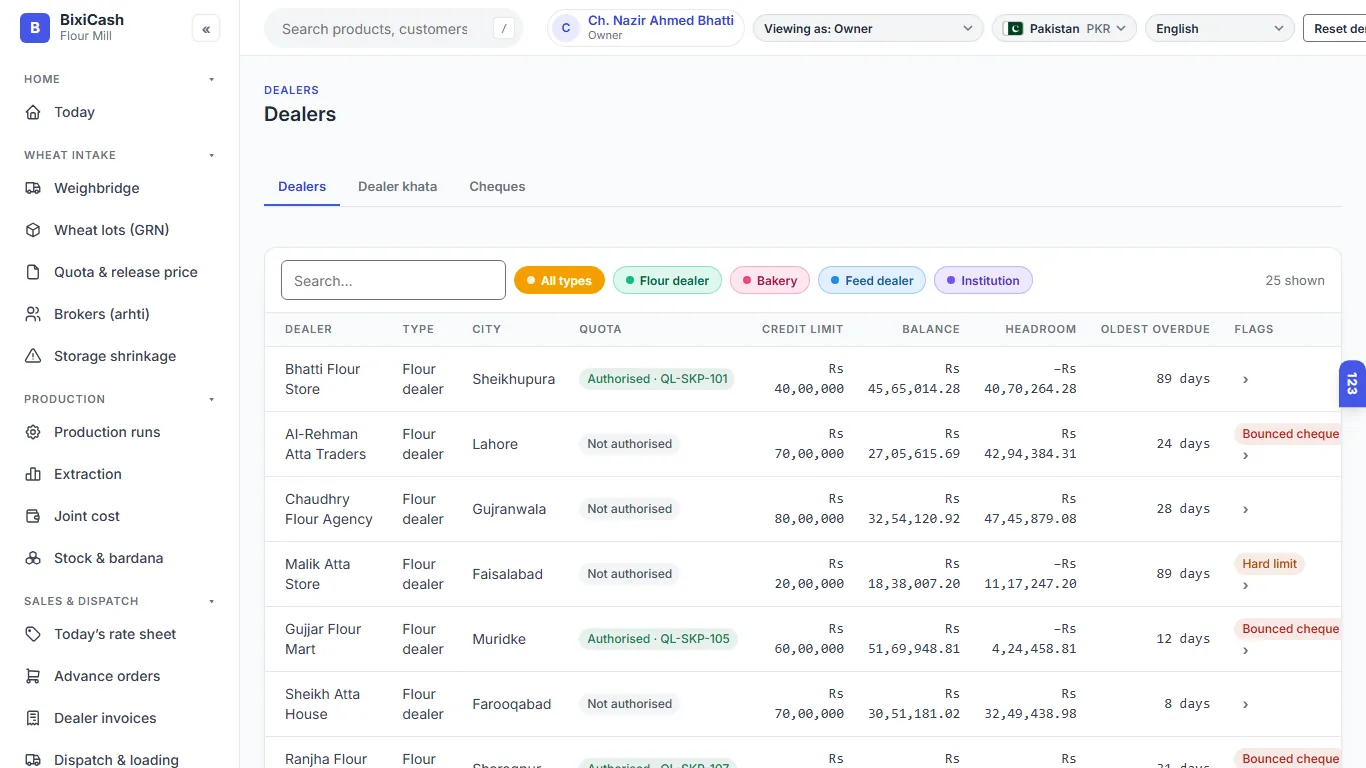
Dealers can buy at the day's rate sheet against a running khata account. The product tracks open invoices, receipts and ageing behind every balance.
Atta sells in 80, 40, 20 and 10 kg bags, each at its own price on the day's rate sheet, all drawn from one stock kept in kilograms.
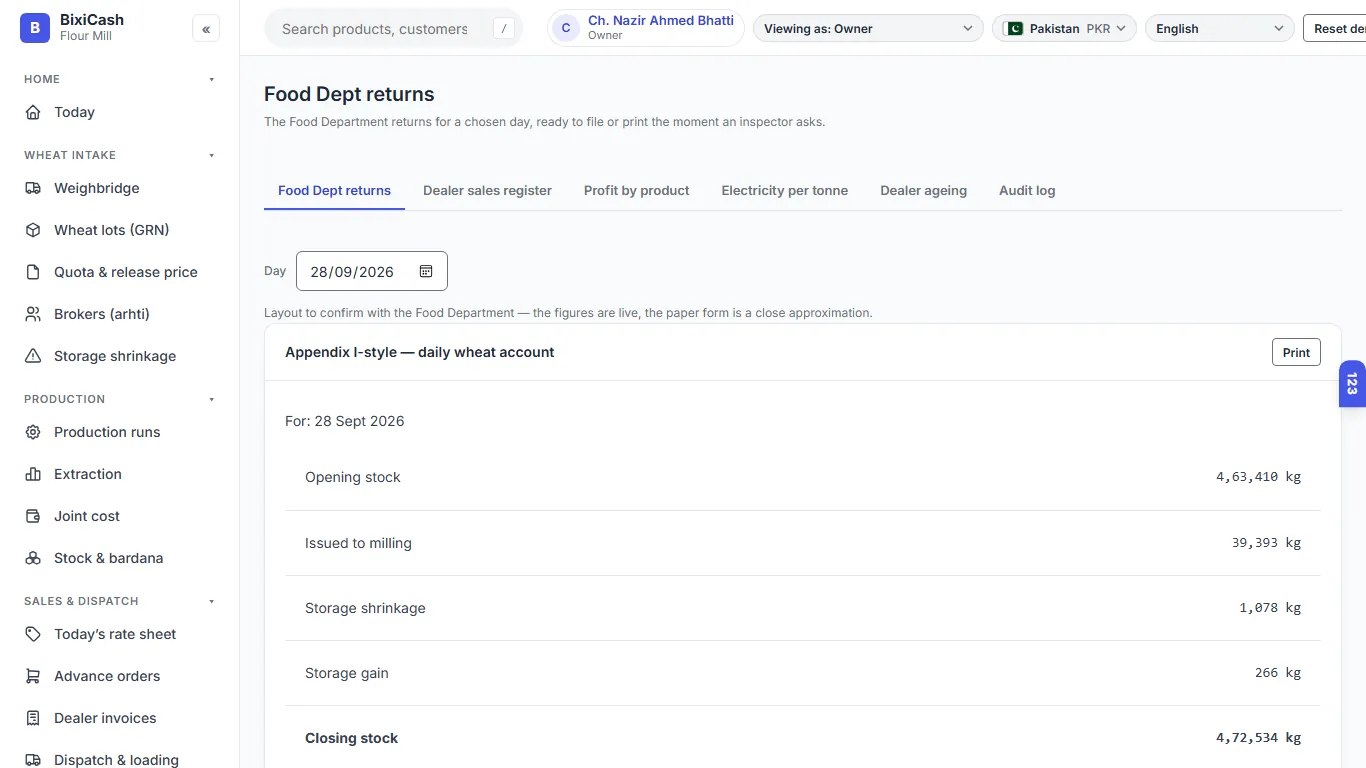
An Appendix-style daily wheat account builds itself from the day's weighments, runs and stock, ready to print when the Food Department asks, not assembled by hand the night before an inspection.
The tax engine lets you set flour as its own tax group and give chokar a separate rate, with nothing assumed exempt just because it came off the same run.
Inside the product
Who uses it
Owner
extraction rate, dealer ageing, wheat cost trend, and whether today's rate sheet is competitive
Weighbridge / procurement officer
a fast, audit-clean weighment against the mill's quota permit
Mill operator
to start and close a run and see output plus wastage clearly, without seeing dealer prices
Accountant
to reconcile cash, cheques and bank against dealer payments, and run payroll across monthly, daily and piece-rate staff
Behind the counter
The screens for your trade sit on a full set of books. These parts come with it.
Double-entry books, statements, period close.
Orders, supplier bills and what you owe.
What you hold, where, and what it cost.
Tax on every line, by your country's rules.
One staff register, attendance, pay runs.
Machines and vehicles, and their wear.
The numbers an owner asks for each morning.
On the counter
Bought together with the software: one delivery, one bill, set up to work.
The price
Introductory price. VAT is added where it applies. A second shop costs the same as the first. Prices for Bahrain, in BHD, as of 28 Sep 2026.
The first 50 shops in Bahrain get free setup and data import with a yearly plan, and today's price locked for two years.
Claim a placeThis trade does not have its own price line yet. The price shown is our retail line, and we confirm it when we quote.
Straight answers
Any size you pack. The demo mill sells 80, 40, 20 and 10 kg bags, because the wheat and flour trade quotes in 40 kg units. Tell us what your own mill packs and we will set it up the same way.
Yes. Quota and private lots are tracked separately, each with its own extraction result, and never blended. Ask for a private demo to see it with a full season of sample data.
Yes. One run's wheat cost is split across all four outputs, by sales value or by weight, shown side by side, so you can see what each one really costs you.
Yes. An Appendix-style daily wheat account comes straight from your weighments, runs and stock. We match the layout to your district's form when we set you up.
We haven't confirmed this. Flour's own sales-tax exemption is well established, but chokar's status is still an open question we're checking. Today, the tax engine already lets you give chokar its own separate rate instead of assuming it's exempt too.
Same aisle
Twenty minutes on a call. We show your day on the screen, with your words and your stock.