Through the day
IMEI captured at sale
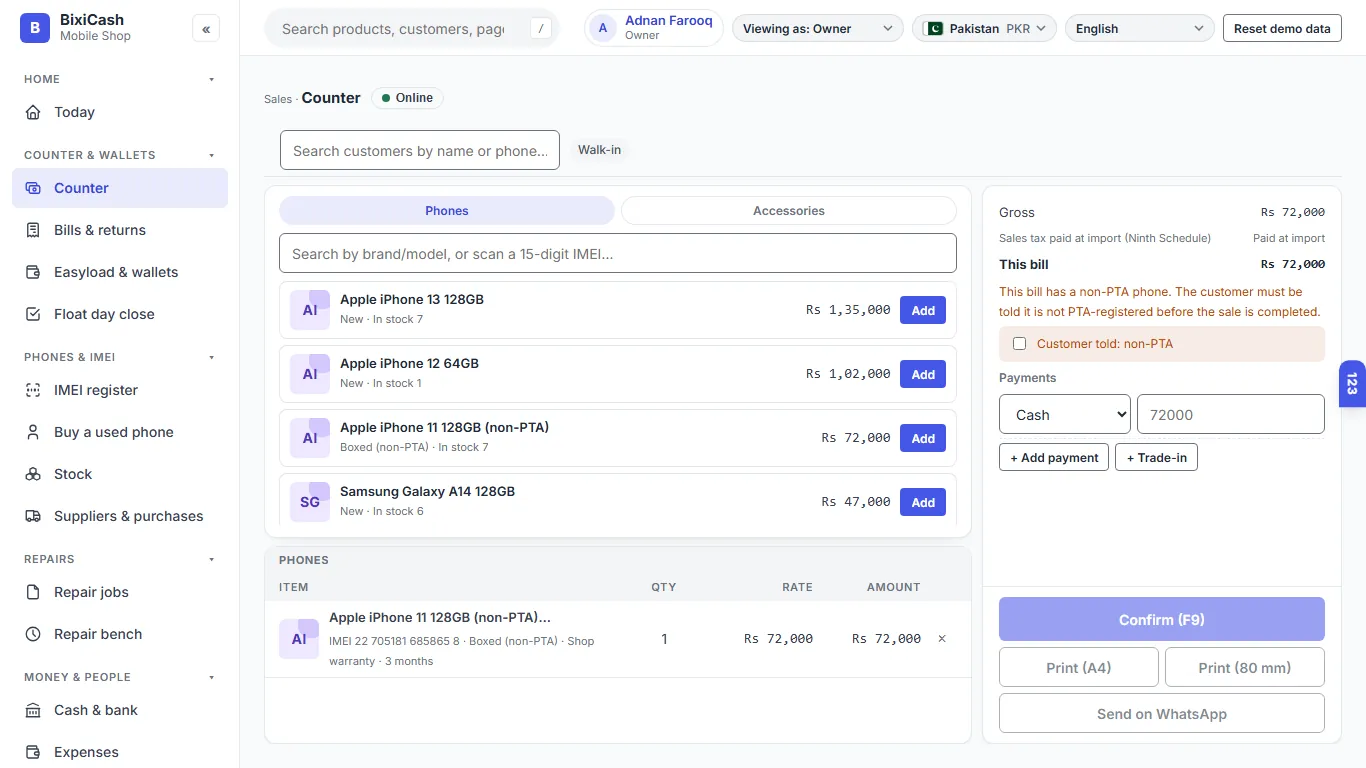
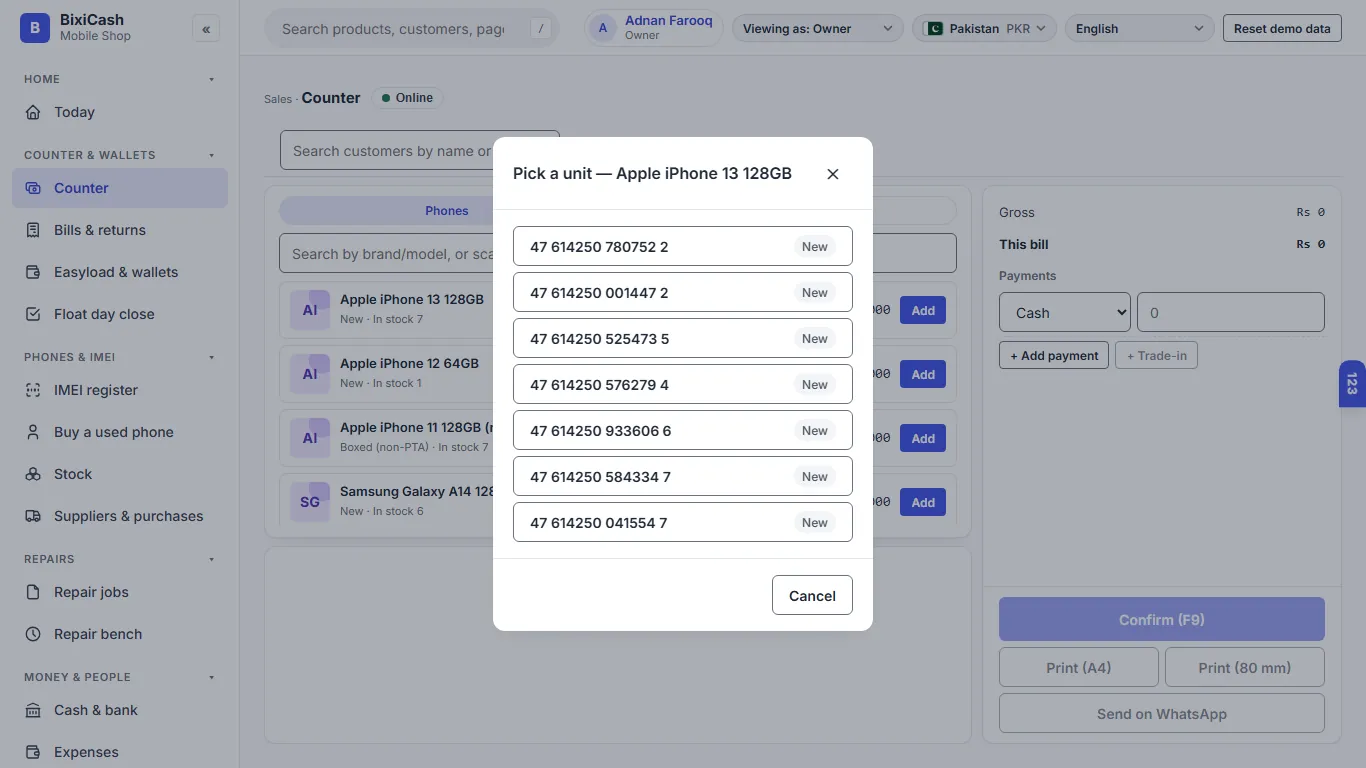
A customer picks a phone; its IMEI is captured before the sale completes.

Live demo Retail & Specialty
Every phone is bought, stocked and sold by its IMEI, and its PTA status is acted on at the till. Used phones are bought with a CNIC and a blacklist check, repairs are approved on WhatsApp, and JazzCash and Easypaisa floats earn their commission in the same books.
A working day
Through the day
A customer picks a phone; its IMEI is captured before the sale completes.
Through the day
The phone's PTA registration status is checked and shown before the customer pays.
Through the day
A trade-in phone is valued and netted against the new sale.
Through the day
A customer starts an instalment plan for a mid-range or flagship phone.
Closing
The owner checks the IMEI/PTA register and the day's accessory fast-movers.
What goes wrong today
A phone sold that turns out to be PTA-blocked after the customer has already left.
No fast way to value a trade-in phone against a new sale.
An instalment book that doesn't show clearly who is overdue.
A discount that quietly drops a flagship phone's margin below cost.
What it does
Parts marked Coming soon are on the way; founding shops get them first, at no extra charge.
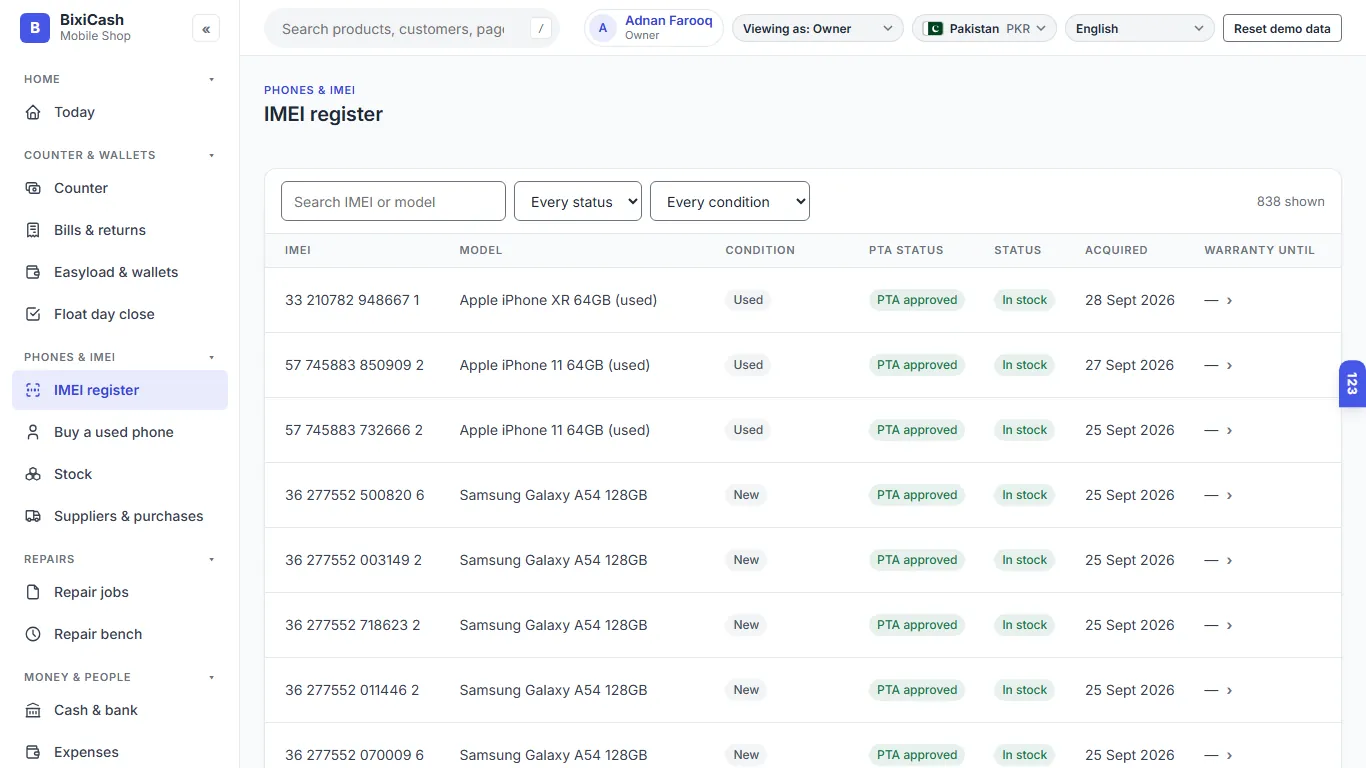
Each phone is picked by its IMEI at the counter, so the bill, the warranty and the stock all point to the exact handset.
A PTA-blocked IMEI cannot be sold, and a non-PTA phone needs the customer told, ticked on the bill, before the sale completes.
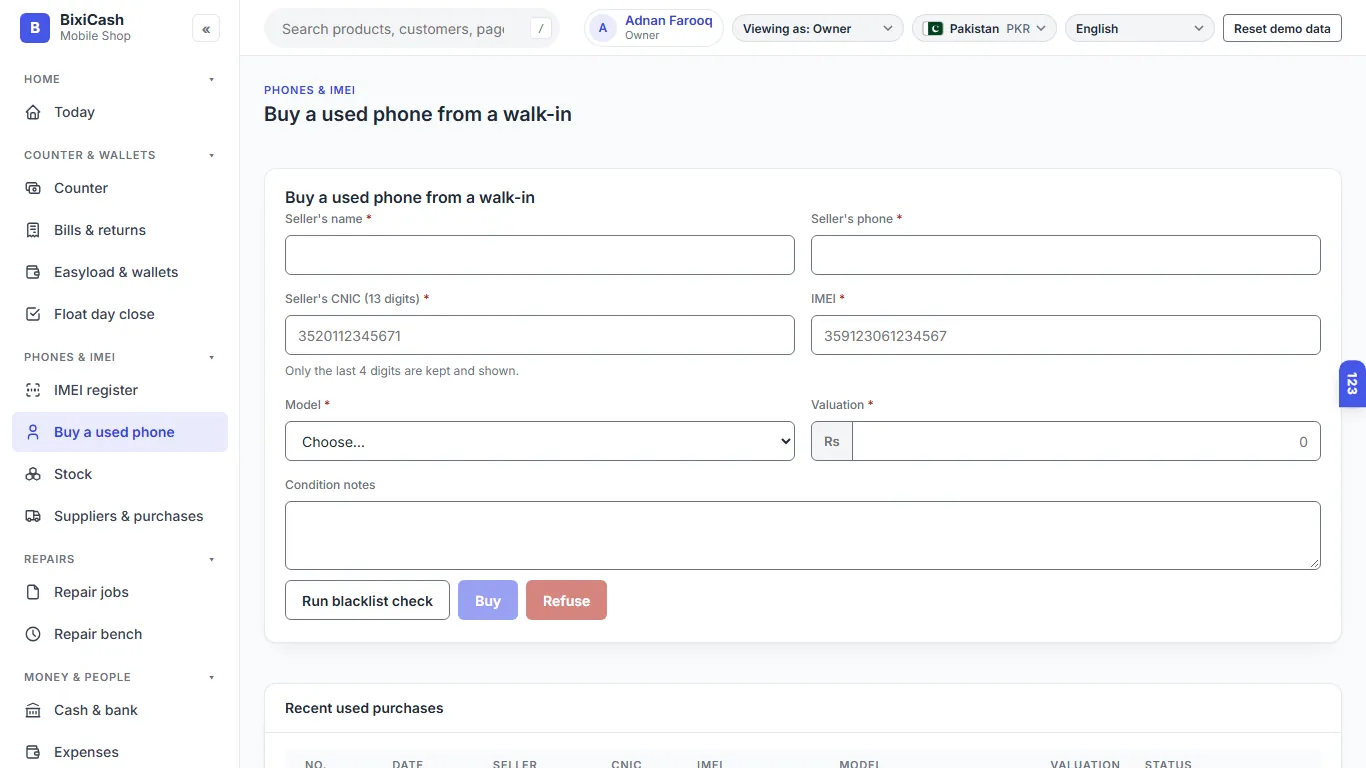
A phone bought from a walk-in records the seller's CNIC and the IMEI, runs a blacklist check, and can be refused.
An old phone traded in comes off the bill as part-payment.
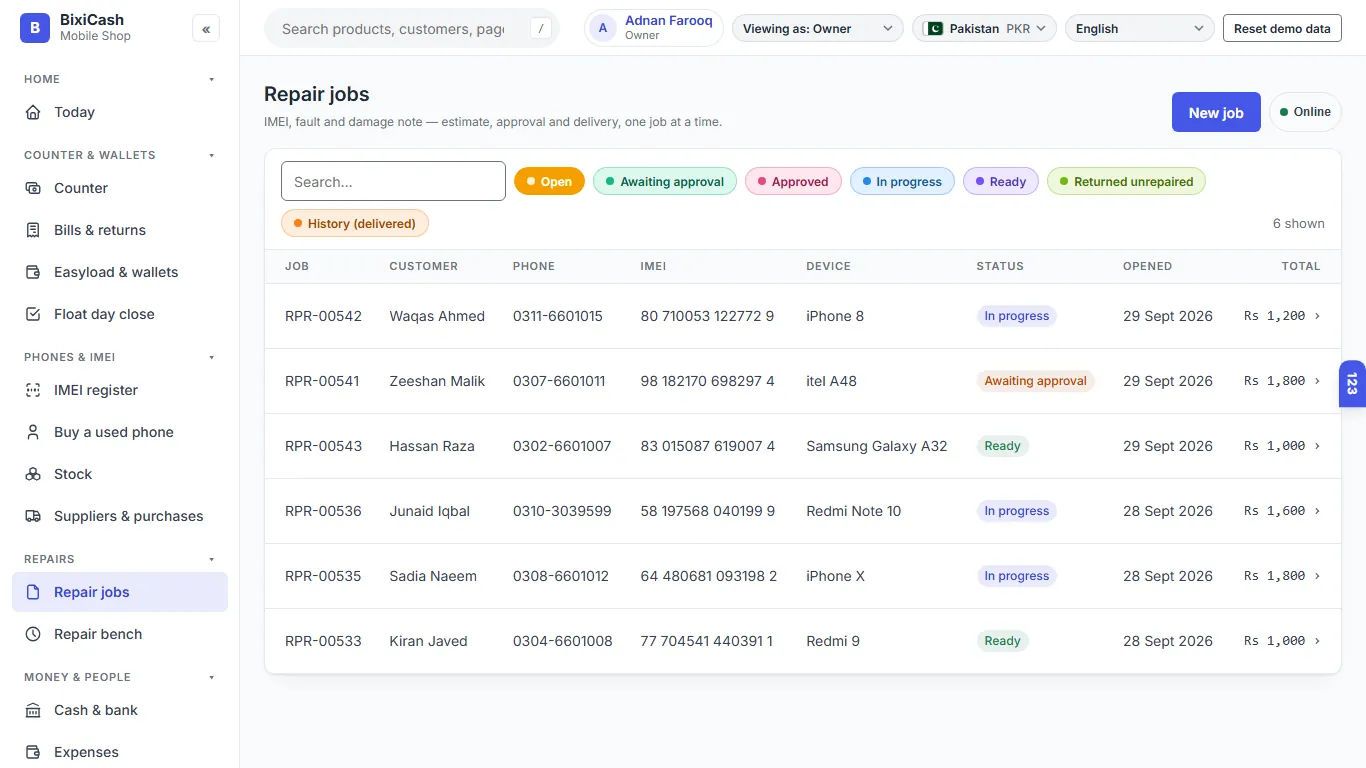
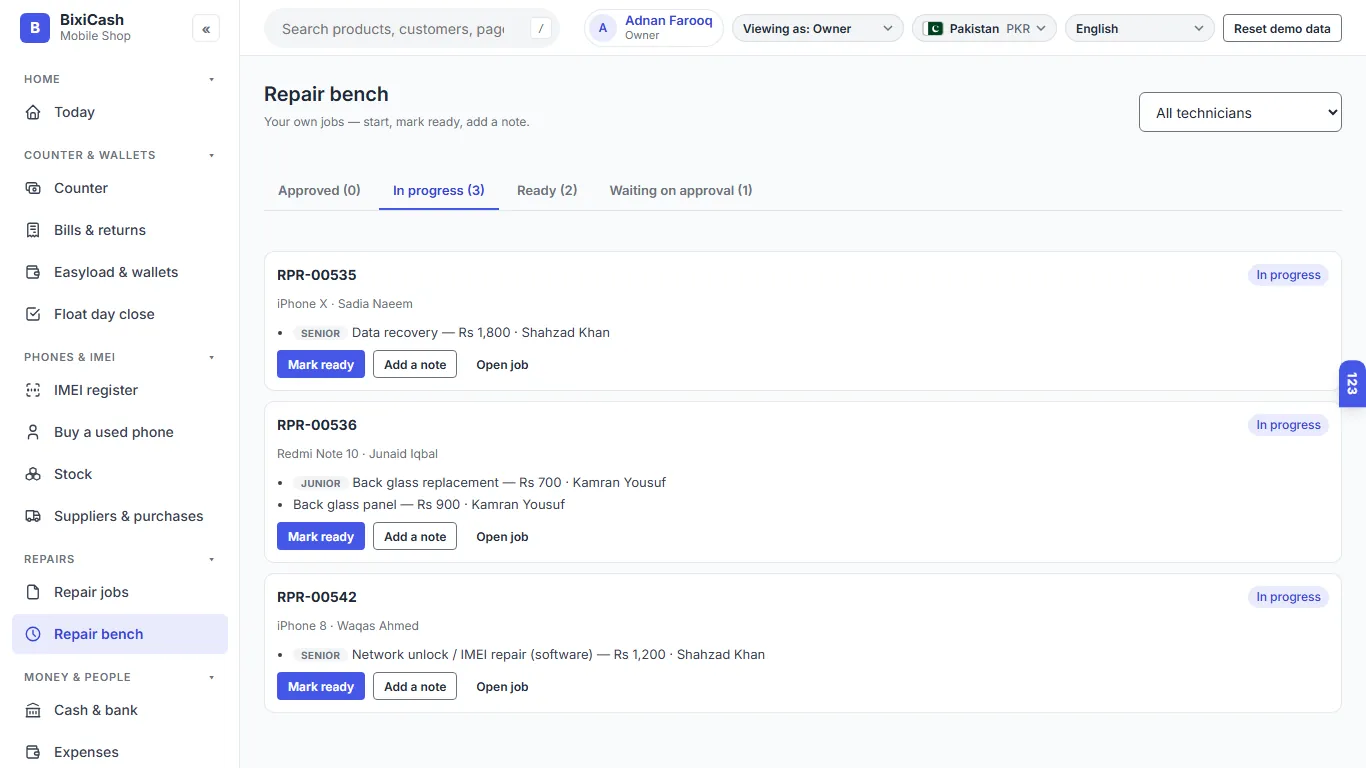
A repair job records the IMEI, the fault and the estimate, goes to the customer for approval on WhatsApp, and moves from the bench to ready to delivered.
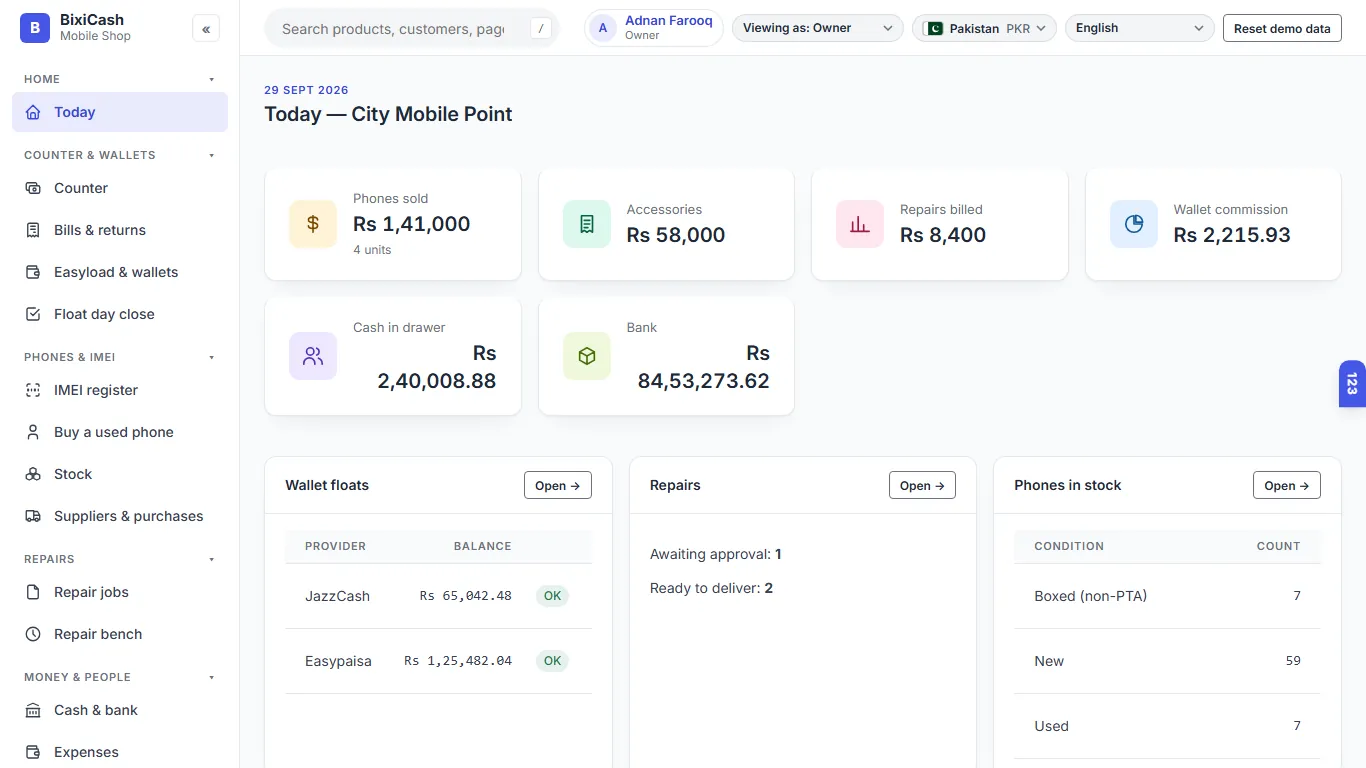
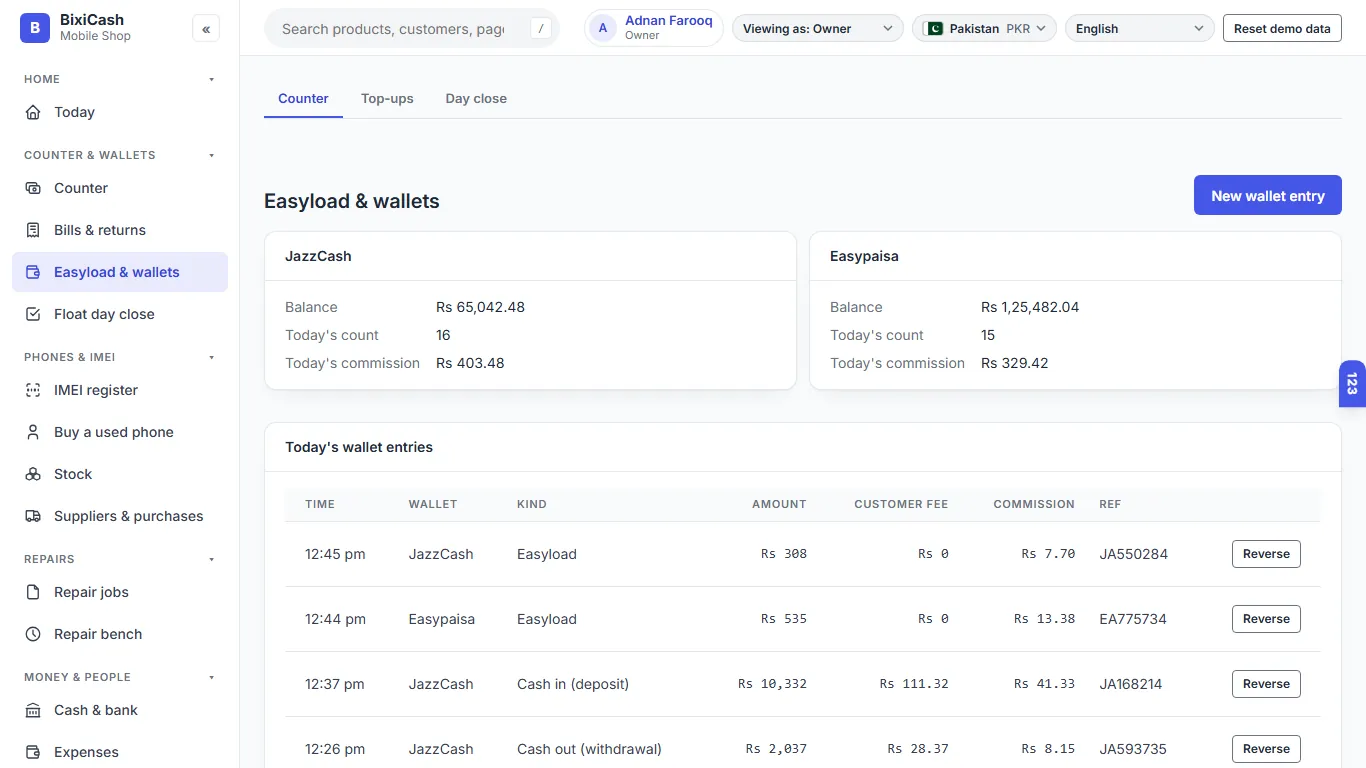
Each wallet's float, the day's transactions and the commission earned are tracked, with a warning when a float runs low.
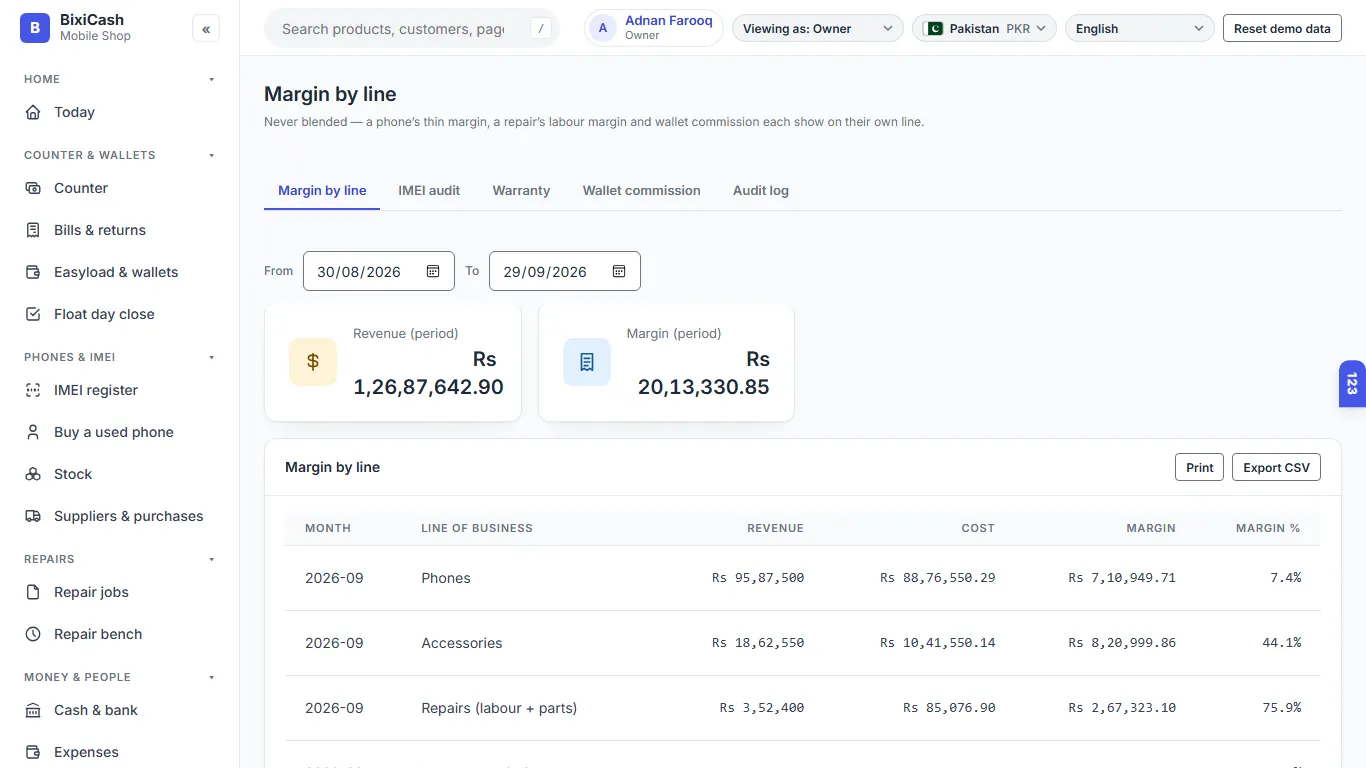
Phones, accessories and repair labour each show their own margin, and staff earn commission per phone sold and on repair labour.
Planned: an instalment sale as its own document, with a down payment and a schedule the till can collect against.
Shown in our demos: a discount can never take a line below cost, even on a flagship phone.
Planned: a small on-site hub that keeps the till selling through an outage.
Inside the product
Who uses it
Owner
The IMEI/PTA register and the instalment book, from a phone.
Sales staff
To capture an IMEI fast and confirm PTA status before tender.
Repair technician
A job intake that captures IMEI at the door, shared with the shop's repair counter.
Behind the counter
The screens for your trade sit on a full set of books. These parts come with it.
Double-entry books, statements, period close.
Orders, supplier bills and what you owe.
What you hold, where, and what it cost.
More than one shop, one set of books.
On the counter
Bought together with the software: one delivery, one bill, set up to work.
The price
Introductory price. VAT is added where it applies. A second shop costs the same as the first. Prices for Saudi Arabia, in SAR, as of 28 Sep 2026.
The first 50 shops in Saudi Arabia get free setup and data import with a yearly plan, and today's price locked for two years.
Claim a placeStraight answers
Yes. Each IMEI carries its PTA status and the till acts on it: a blocked phone cannot be sold, and a non-PTA phone needs the customer told before the sale completes.
Yes. Every phone is bought, stocked and sold by its IMEI, and the IMEI register shows each unit's condition, PTA status and warranty.
Yes. A trade-in comes off the bill as part-payment.
Not yet. An instalment plan with a real schedule is planned.
No. That is decided and shown in our demos.
Record the seller's CNIC and the phone's IMEI, run the blacklist check, then buy it or refuse it.
Yes. Each wallet's float, transactions and commission are tracked, and a low float is flagged.
Same aisle
Twenty minutes on a call. We show your day on the screen, with your words and your stock.