Before dawn
Trucks arrive
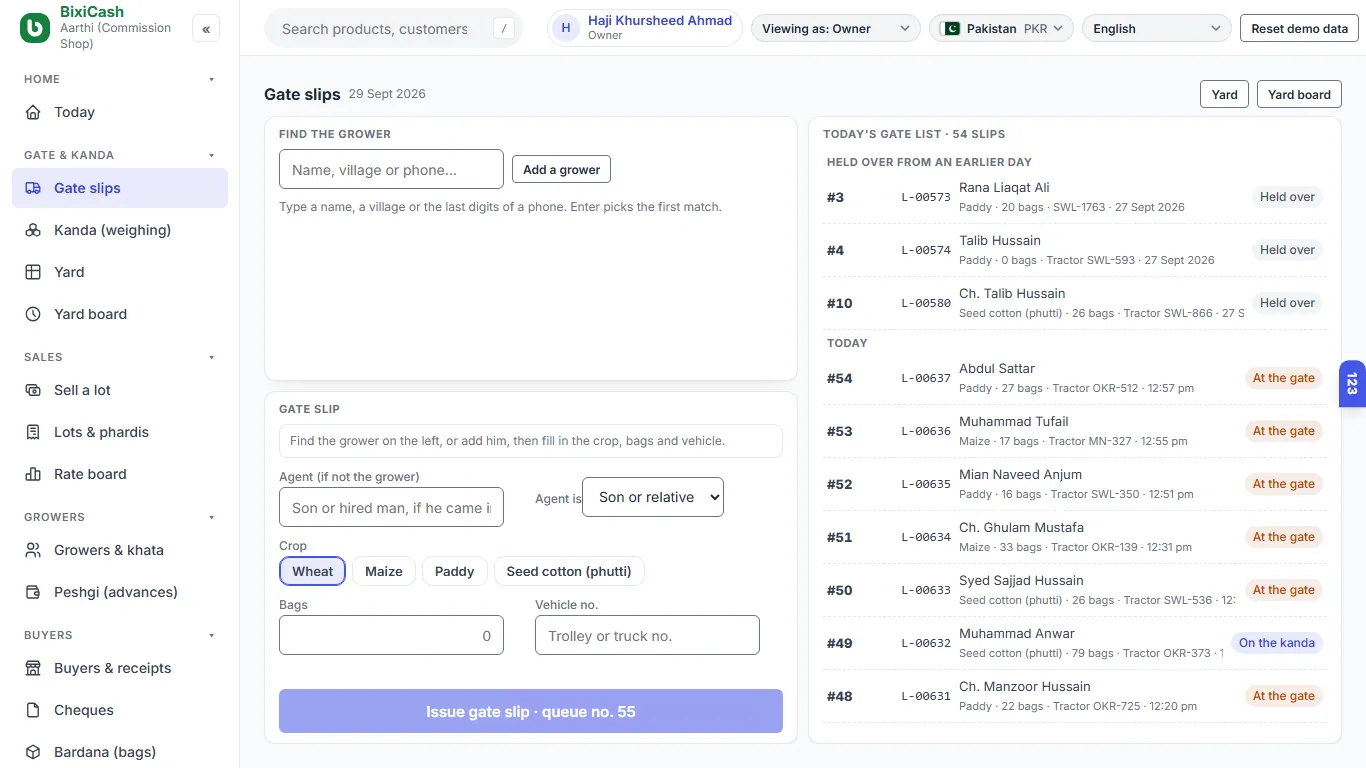
A farmer's truck reaches the gate. The gatekeeper logs it and issues a gate pass against the farmer's name and produce.

Live demo Agriculture & Livestock
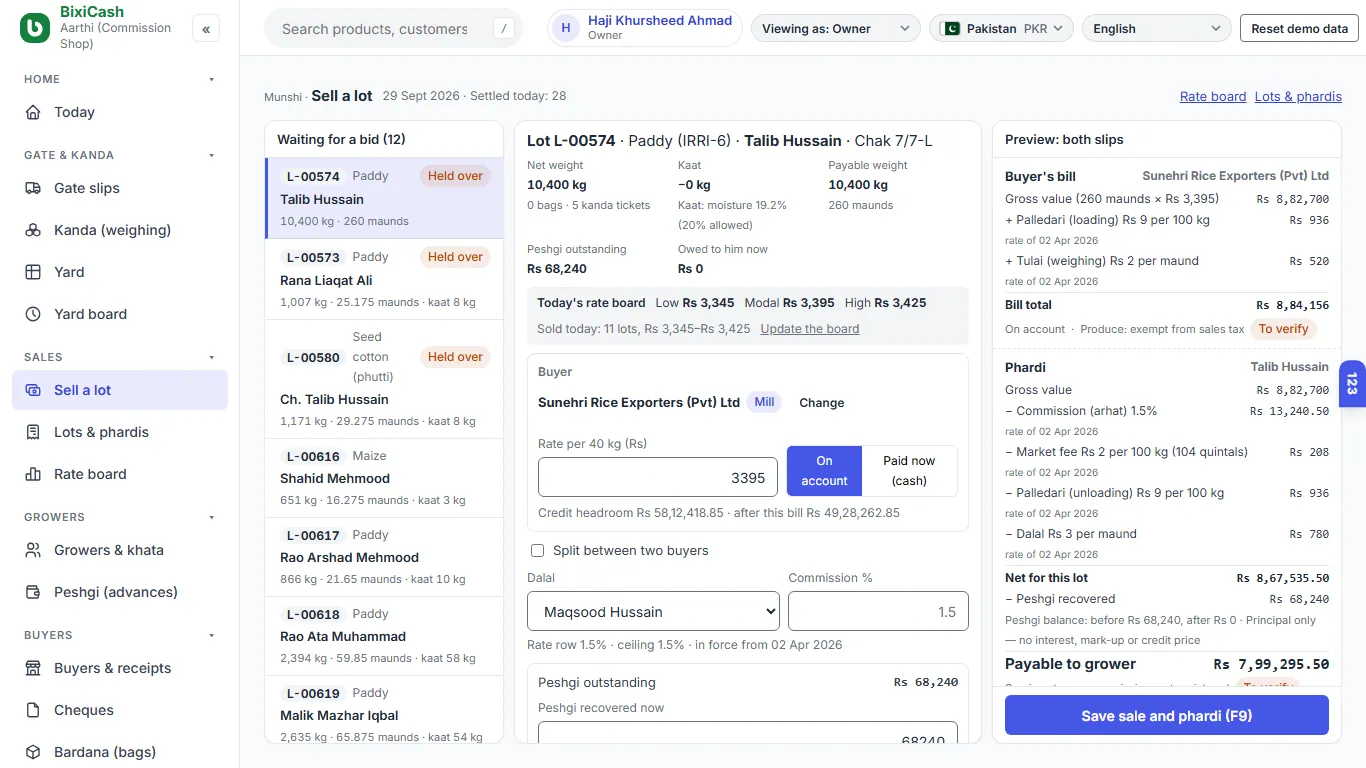
From the gate slip to the kanda, the boli and the settlement, one entry prints the buyer's bill and the grower's phardi together, and the grower is paid the same day. Peshgi is recovered principal only, never with interest, and the owner sees five figures that never blend.
A working day
Before dawn
A farmer's truck reaches the gate. The gatekeeper logs it and issues a gate pass against the farmer's name and produce.
Morning auction
The weighman takes the lot to the weighbridge and enters the reading against the waiting gate pass.
Morning auction
The munshi records the buyer and the rate. Commission, the market-committee cess and any bardana charge are worked out on the same screen.
Midday
The farmer is paid out in cash or by bank, the same day wherever possible, while the buyer's share goes onto khata.
End of day
The owner reviews today's lots, buyer ageing and how much cash has gone out to farmers.
What goes wrong today
A single lot pays a farmer and charges a buyer at the same time, and a paper bahi khata rarely keeps commission, cess and bardana as separate, checkable lines.
Buyer balances build up over days and are hard for the owner to check without asking the munshi to go through the register.
Gunny bags issued to farmers and bags charged back rarely get reconciled against what was actually supplied.
The statutory cess collected on the committee's behalf is easy to spend as if it were the aarthi's own commission.
What it does
Parts marked Coming soon are on the way; founding shops get them first, at no extra charge.
One settlement shows the buyer's bill and the grower's phardi side by side before either is printed, so both sides of the lot always agree.
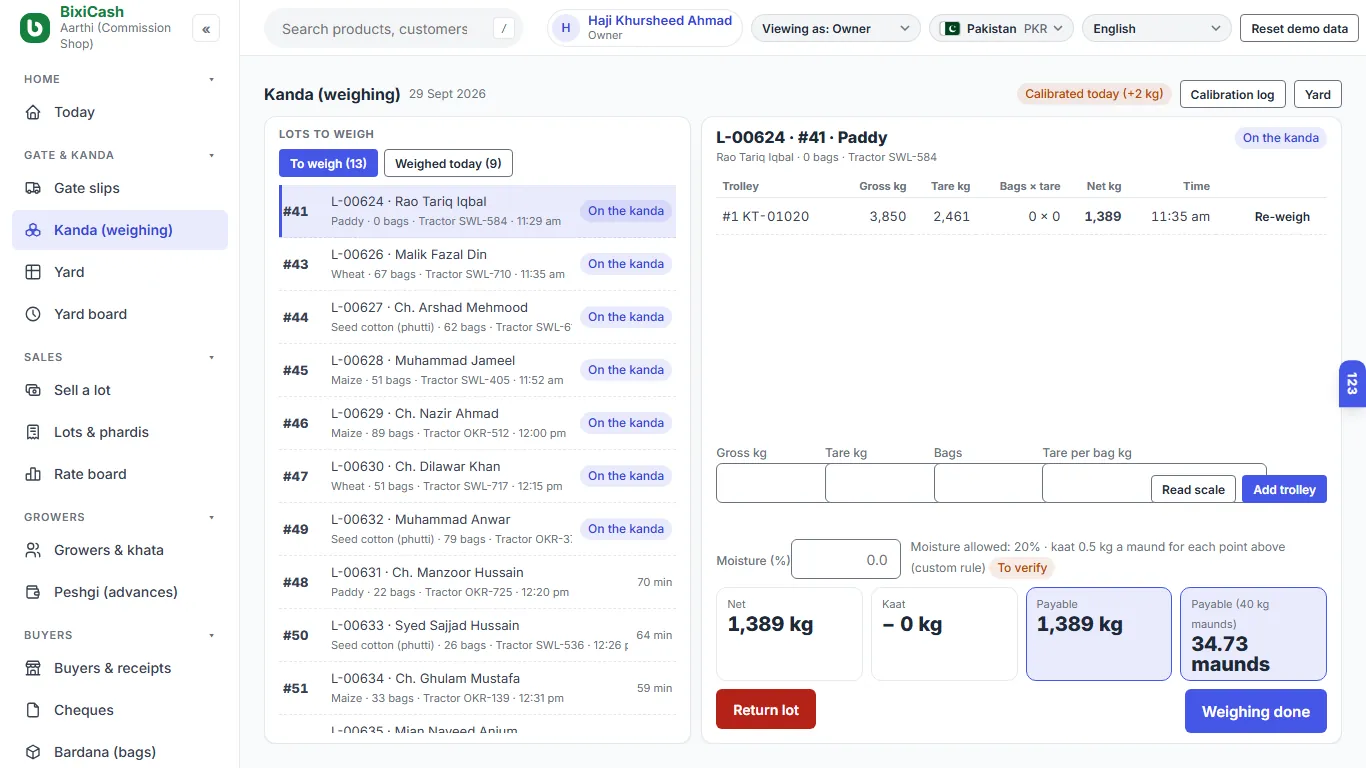
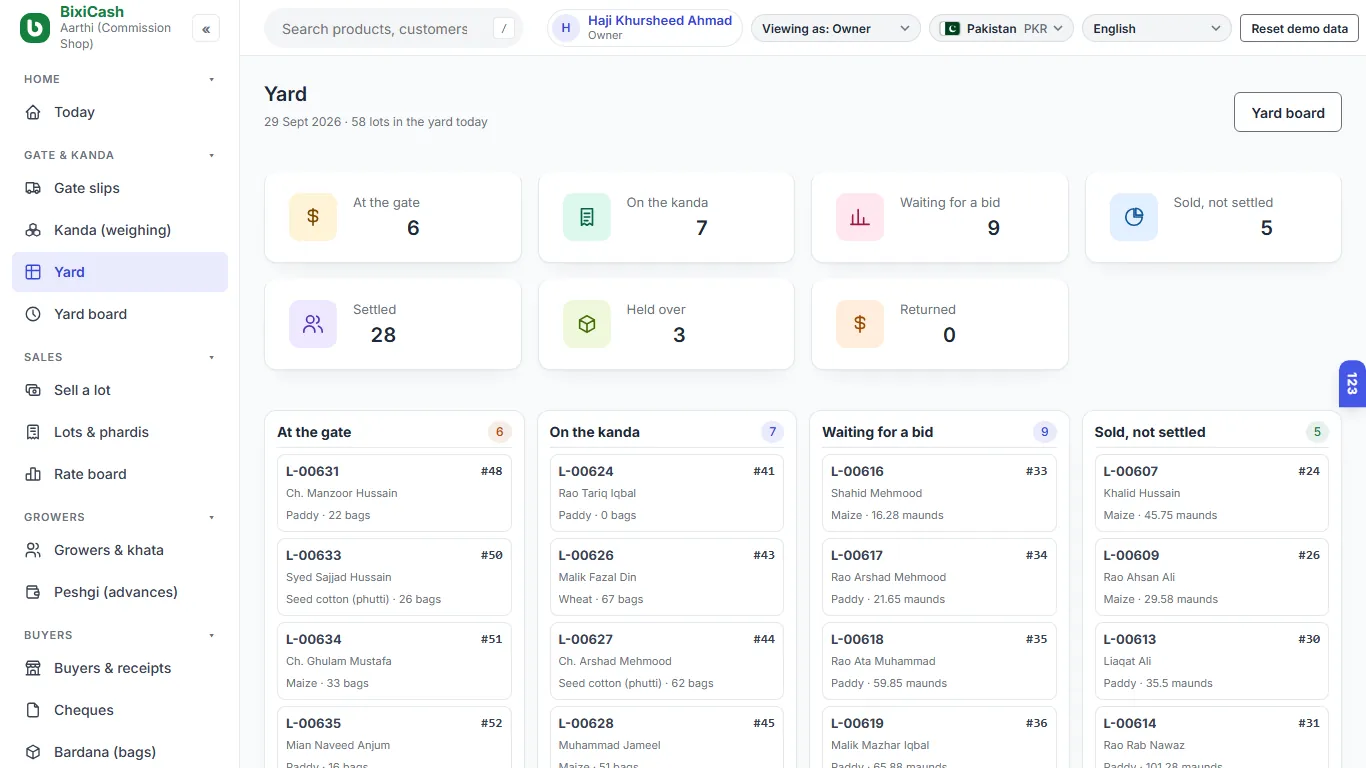
The gate clerk gives a slip with a queue number. The weighman records each trolley's weight and moisture, and the kaat and the payable weight show in kilograms and maunds.
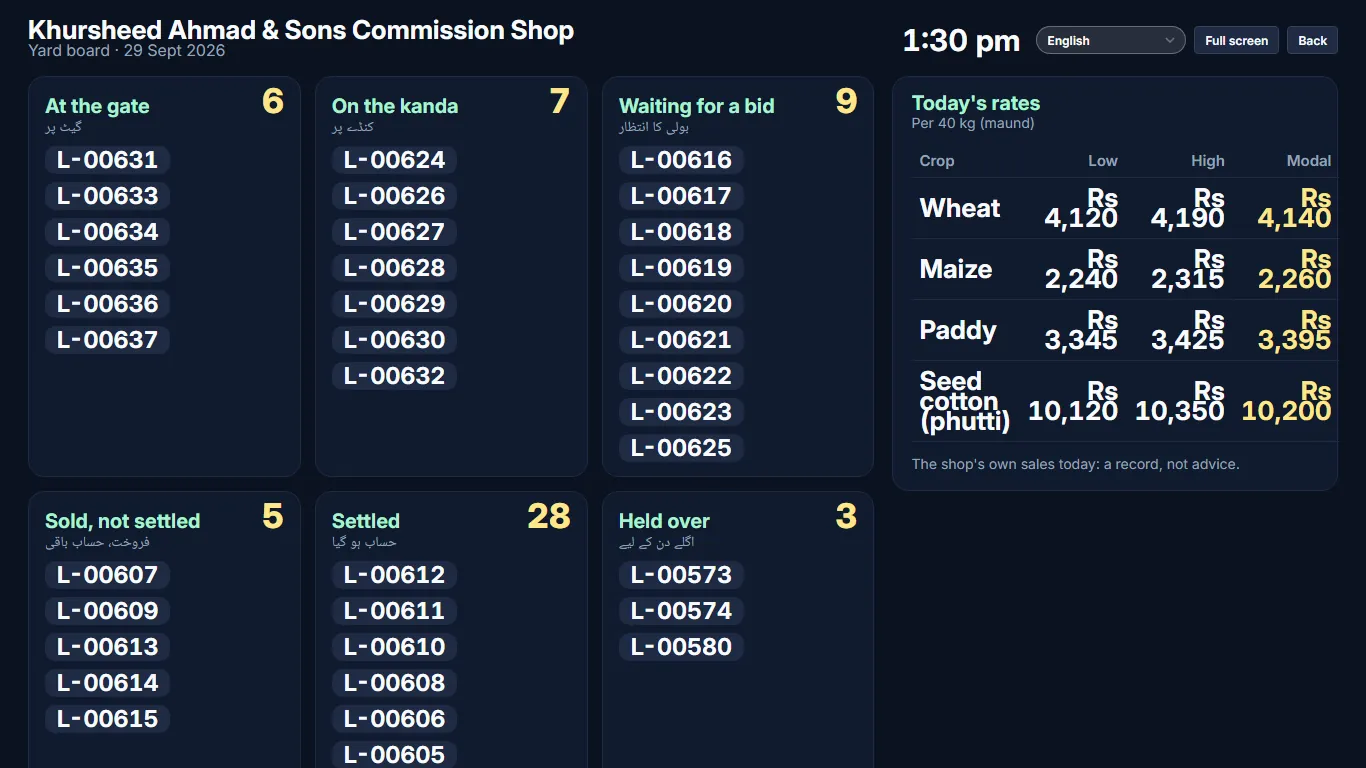
Lots are sold by open bidding to mills and traders, and the yard's TV board shows lot numbers and the day's rates, never names or amounts.
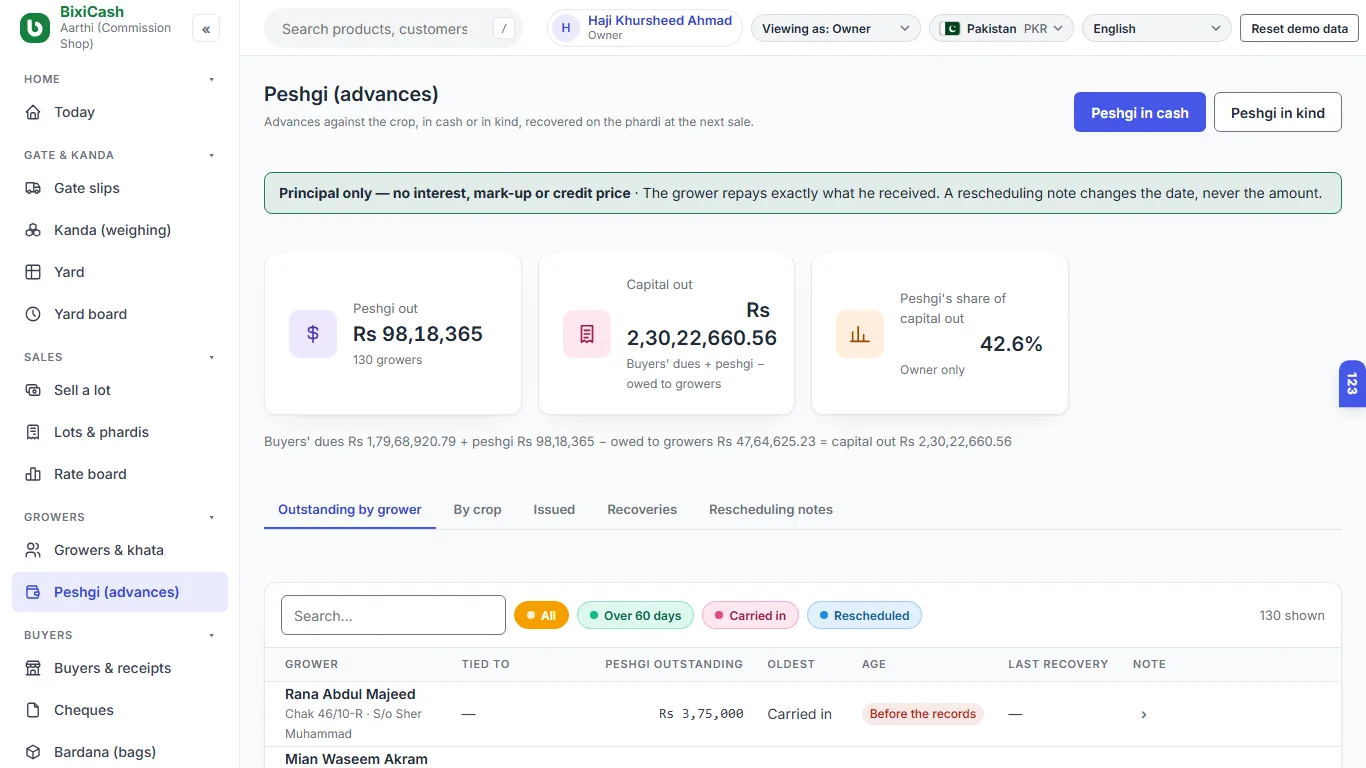
An advance is recovered from the sale as exactly what the grower received. No interest, mark-up or credit price is ever charged or printed.
Commission, the market fee, palledari, tulai and dalali each come from a rate with its own effective date, and each prints on its own line of the phardi.
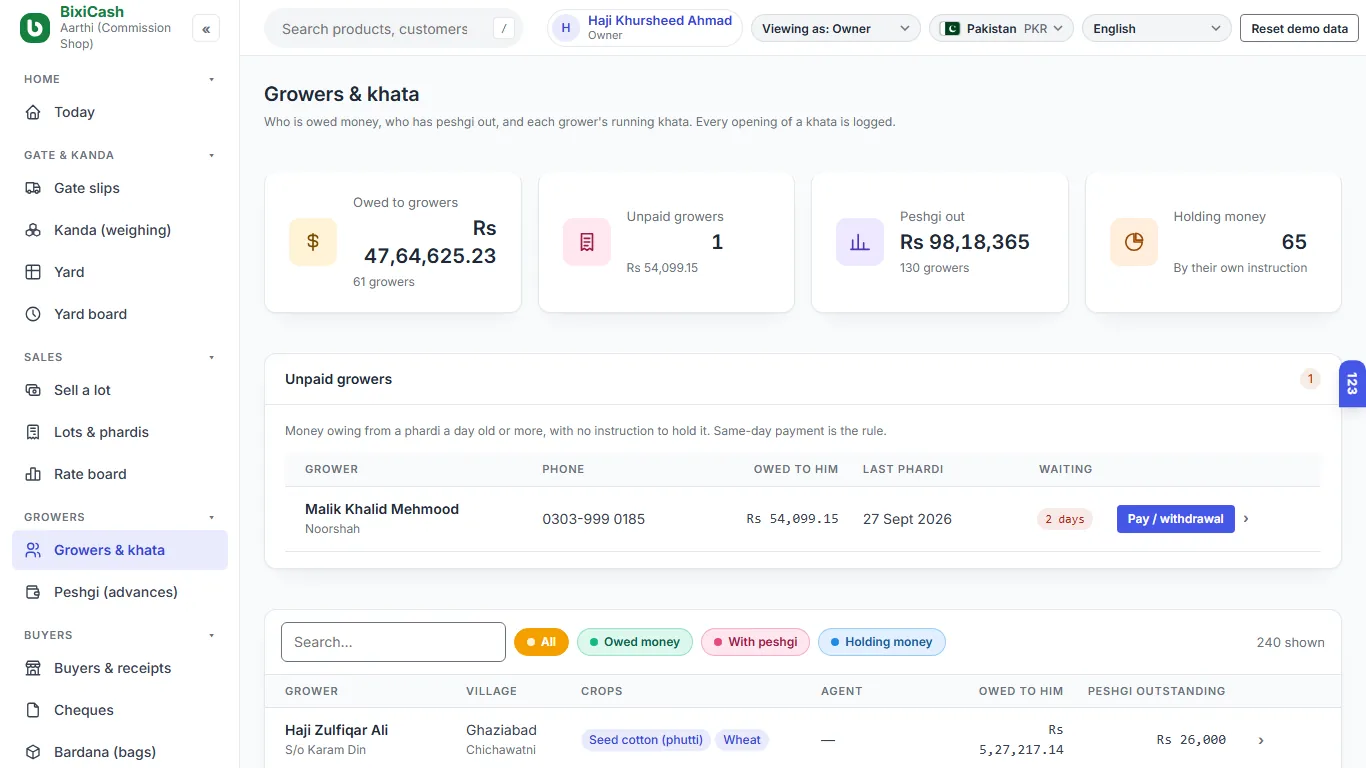
Each grower and each mill or trader has a running account. Buyers' cheques are tracked until they clear, and a buyer can be put on hold, cash only.
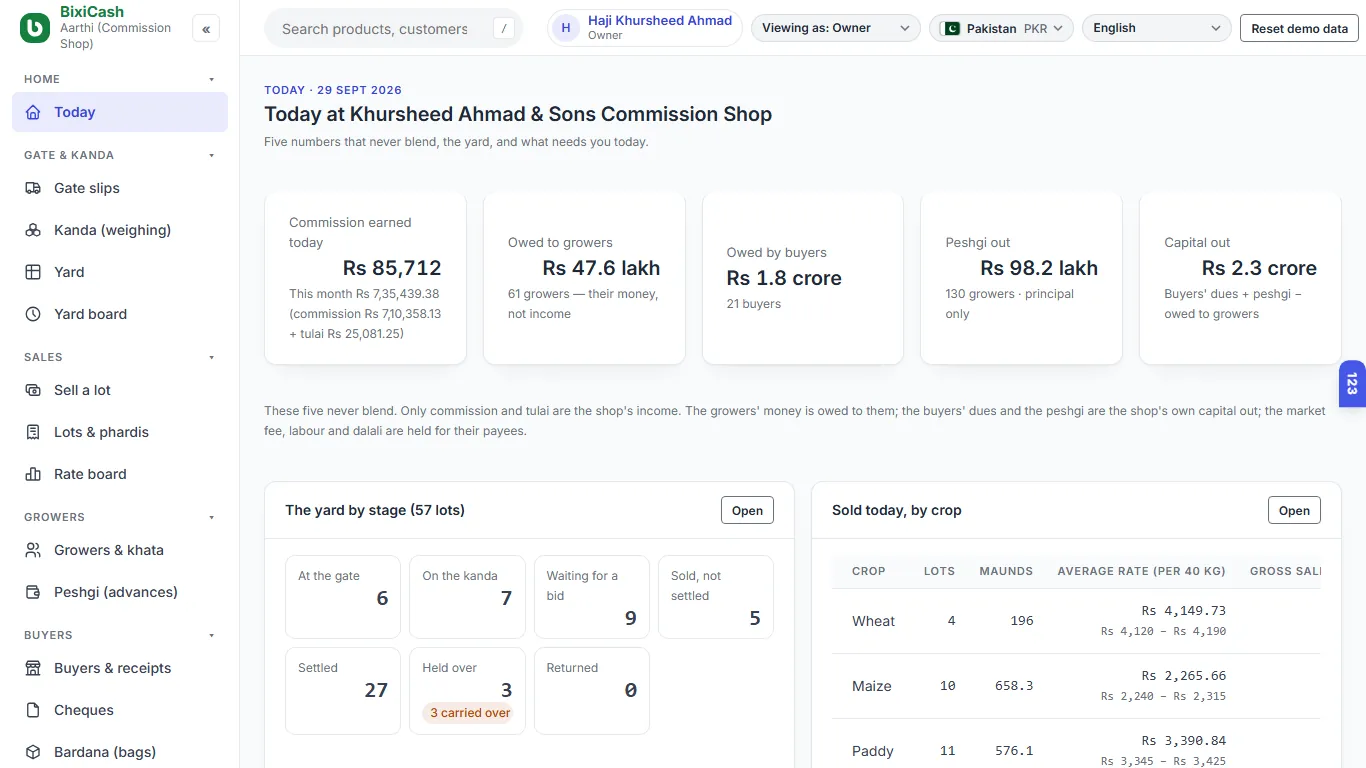
The owner sees commission earned, what is owed to growers, what buyers owe, peshgi out and capital out, in lakh and crore, never mixed together.
Gunny bags issued to growers and buyers, and bags charged back on the phardi, run as their own account.
A grower's statement or phardi goes on WhatsApp, in Urdu or English, only to a grower who has agreed to it.
Planned: a small on-site relay hub records a lot even when the mandi's internet drops, and forwards it once signal returns.
Inside the product
Who uses it
Owner / aarthi
to see today's lots, buyer ageing and cash paid to farmers, and to approve a large settlement
Munshi (accountant)
to record a lot once and have the farmer payable, buyer receivable, commission and cess all come out right, without recalculating by hand
Weighman (tulai)
a fast way to enter a weighbridge reading against the lot that is waiting, without touching the ledger
Gatekeeper
to log an arriving truck and print a gate pass in a few seconds
Behind the counter
The screens for your trade sit on a full set of books. These parts come with it.
Double-entry books, statements, period close.
Cash, bank, cheques and reconciliation.
Orders, supplier bills and what you owe.
Quotations, orders, invoices, delivery notes.
One staff register, attendance, pay runs.
The numbers an owner asks for each morning.
More than one shop, one set of books.
On the counter
Bought together with the software: one delivery, one bill, set up to work.
The price
Introductory price. State sales tax is added where it applies. A second shop costs the same as the first. Prices for United States, in USD, as of 28 Sep 2026.
The first 50 shops in United States get free setup and data import with a yearly plan, and today's price locked for two years.
Claim a placeThis trade does not have its own price line yet. The price shown is our retail line, and we confirm it when we quote.
Straight answers
Yes, in the demo: one lot entry produces the grower's phardi and the buyer's bill together, every deduction on its own line, and both khatas are updated.
Yes. Each deduction is its own line on the phardi, from a dated rate, and the market fee is held apart as money owed to the market committee, not the shop's.
Yes. A bounced cheque goes back on the buyer's khata and the buyer can be put on hold, cash only, without touching the grower's side of the lot.
Planned: a small on-site relay hub is meant to keep recording lots through an outage.
Yes, stock and location tracking already work by branch in the product; a second yard is the same idea applied to a mandi office.
No. A peshgi is recovered as exactly what was given; a rescheduling changes the date, never the amount.
Same aisle
Twenty minutes on a call. We show your day on the screen, with your words and your stock.