Morning
The beat goes out
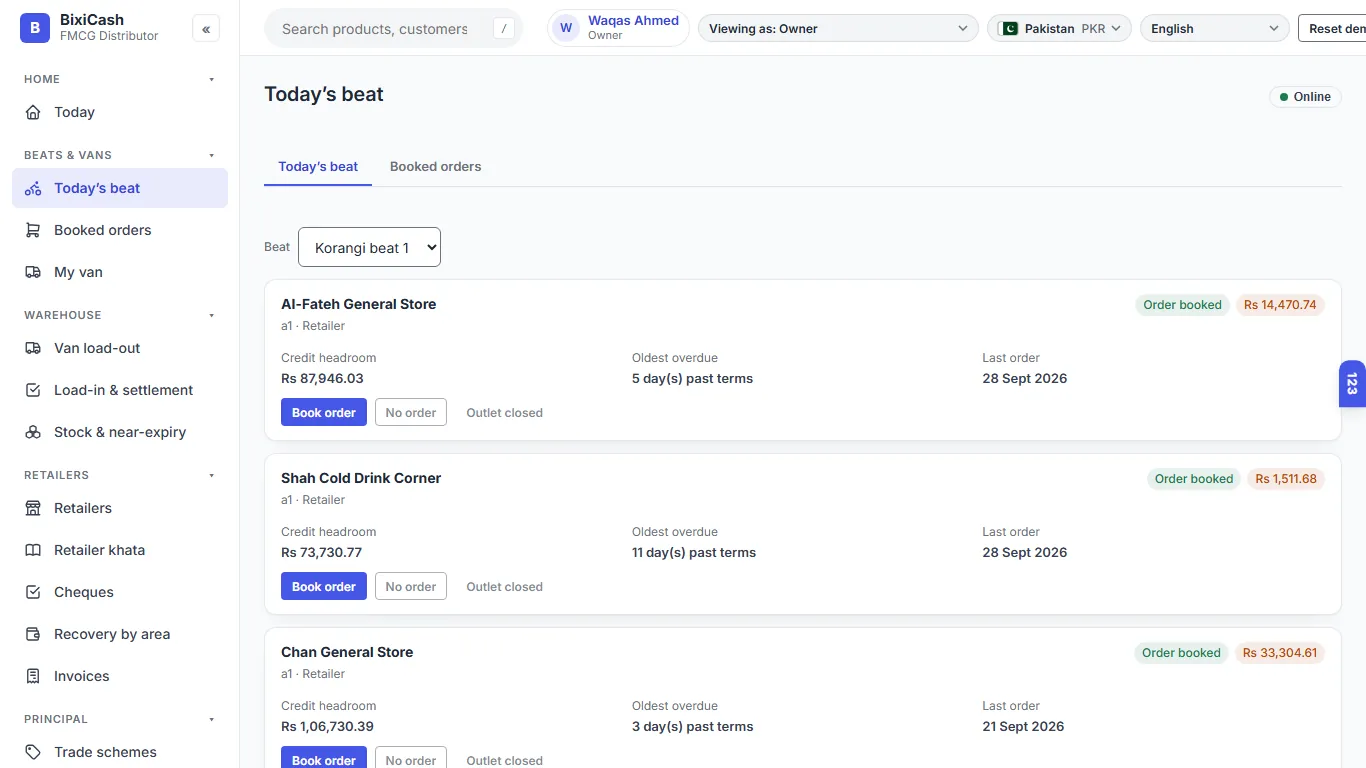
Today's route comes from the beat plan — each area has its own day of the week — and the order booker heads out with the retailer list for that beat.

Live demo Trade & Distribution
Books each retailer's order on the day's beat with the scheme already applied, loads the van in the morning and settles it at night, with every variance posted with its reason. Recovery follows dues by area, not by memory.
A working day
Morning
Today's route comes from the beat plan — each area has its own day of the week — and the order booker heads out with the retailer list for that beat.
Through the day
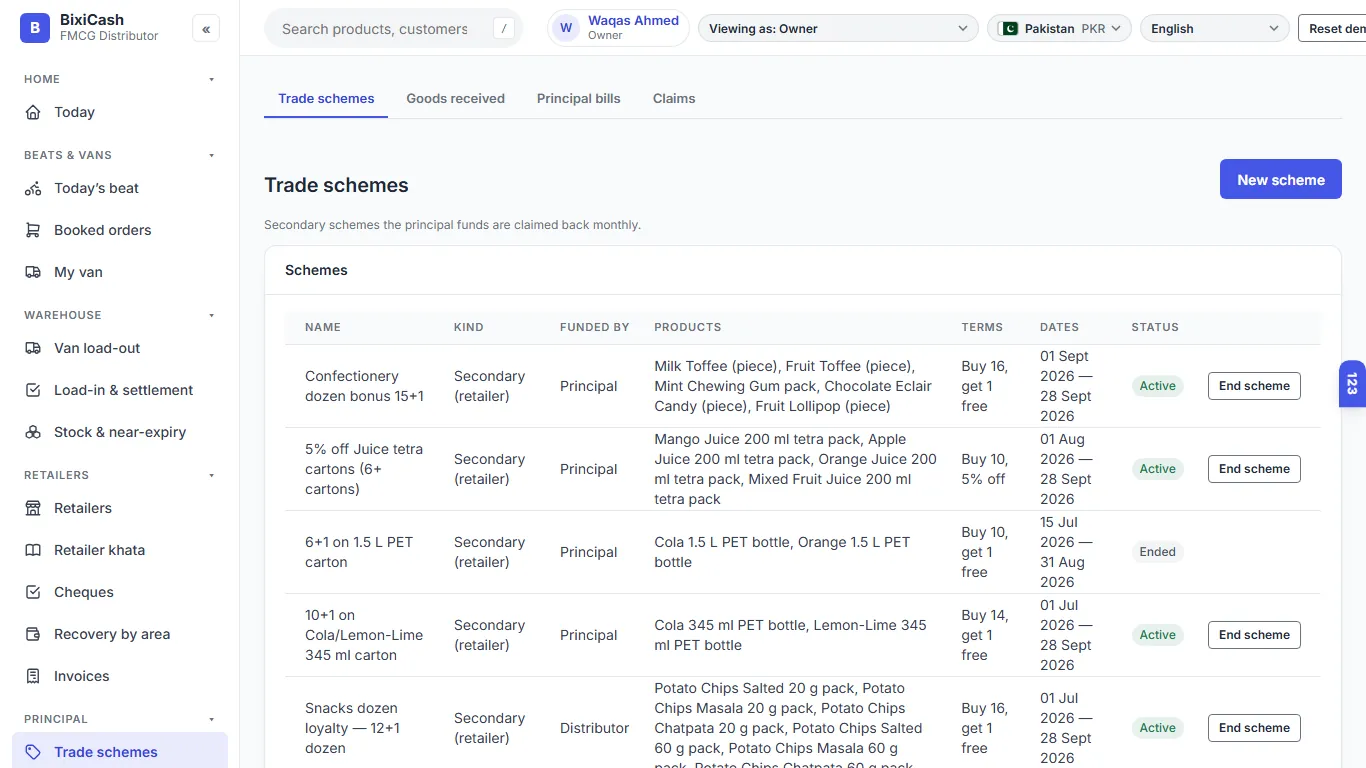
The order booker visits a retailer, books an order, and a scheme like 12+1 or a slab discount is worked out on the same line.
Through the day
The warehouse dispatches the batch, the van is loaded, and the order is delivered the same or next day against an invoice.
At delivery
The driver collects cash on the spot or leaves the balance on the retailer's khata, and a signature or photo confirms delivery.
Evening
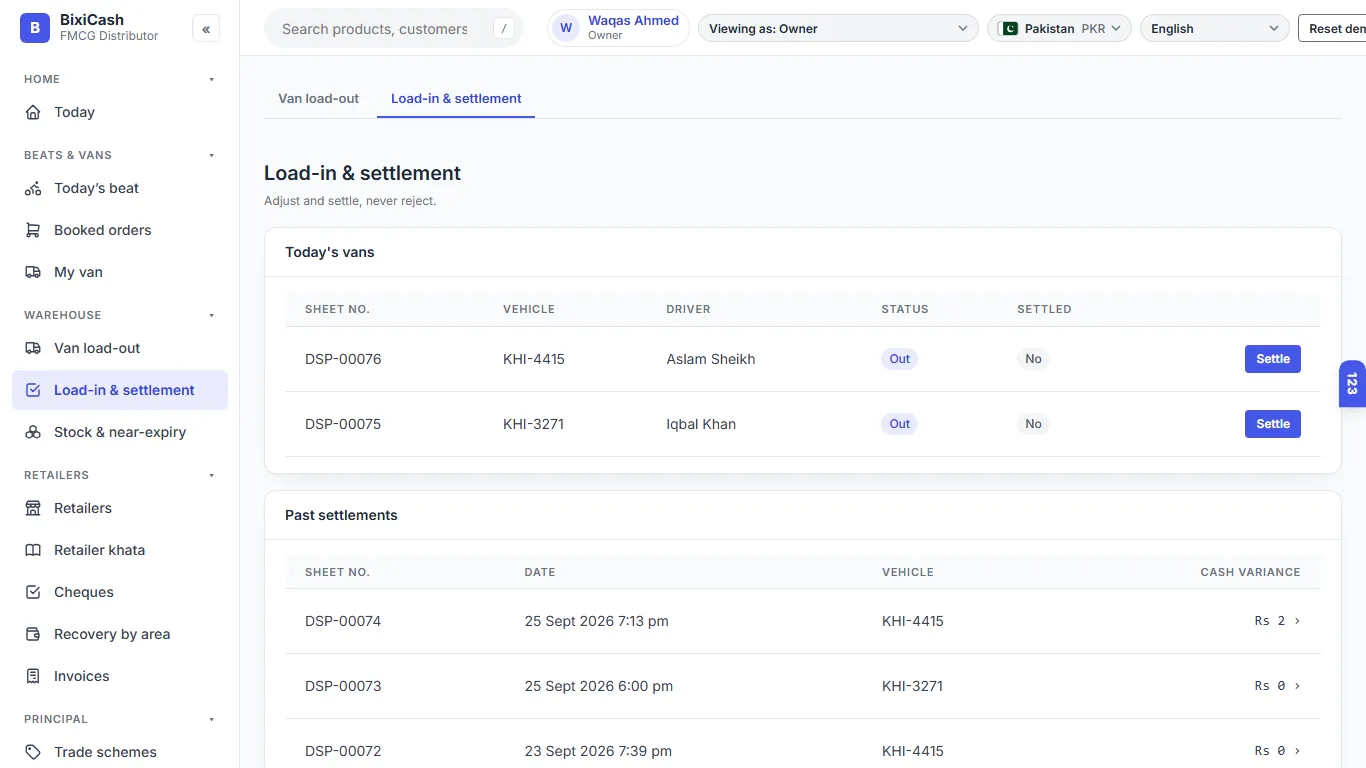
Opening stock, what was loaded, sold, returned and the cash in hand are reconciled against each other before the next day's beat is planned.
Weekly
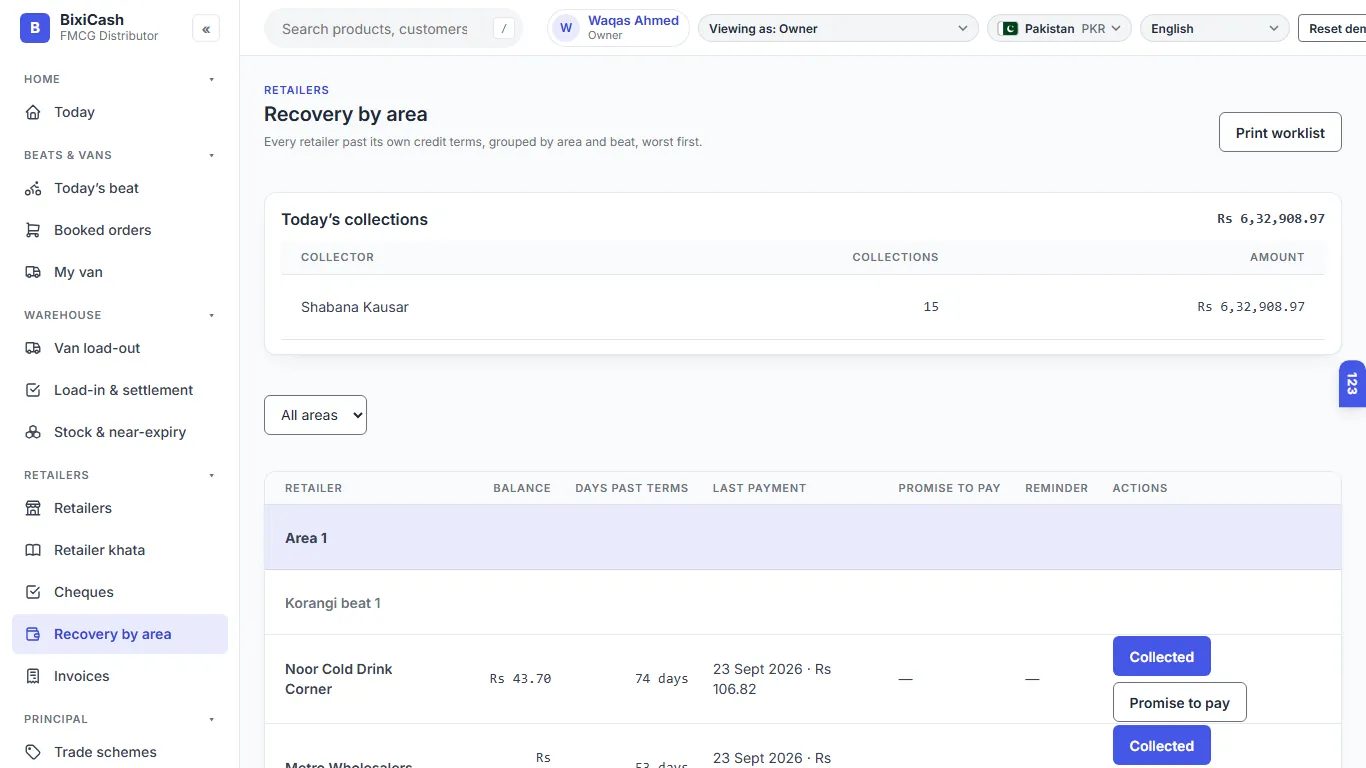
The recovery officer works the dues-by-area list, marking what's collected and what's promised.
What goes wrong today
What was loaded, sold, returned and collected in cash rarely reconciles without a manual tally.
A 12+1 or slab scheme is worked out on paper, then argued over again when the principal's claim sheet arrives.
Retailer balances spread across a beat with no ageing by area, so collection depends on memory.
A perishable line, bakery or dairy-adjacent snacks, sits on the shelf past its best day before anyone flags it.
What it does
Parts marked Coming soon are on the way; founding shops get them first, at no extra charge.
The order booker works the day's beat outlet by outlet, books each order in cartons, dozens or pieces, and every call counts towards productive calls and lines per call.
A scheme like 10+1 or 5% off applies on the order line as it is booked. Scheme, damage, expiry and price-difference claims are tracked until the principal pays.
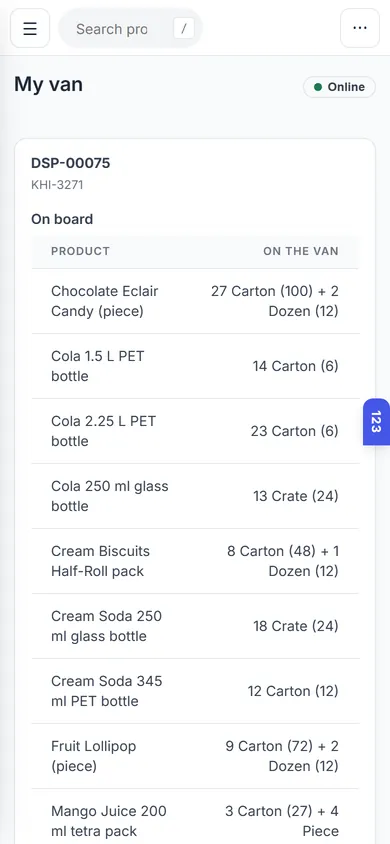
The van loads against the day's orders. A short or damaged pack is recorded at the door with its reason, and at night load-in settles stock and cash, posting any variance with its reason instead of rejecting the settlement.
A line can sell by the carton, the dozen, the crate or the piece, each at its own price, all drawn from one stock count.
Every retailer's balance is aged, and the recovery worklist groups what is due by area, so the collector's day is planned, not remembered.
Batches within 45 days of expiry are listed by line, so they are pushed out first or claimed back from the principal in time.
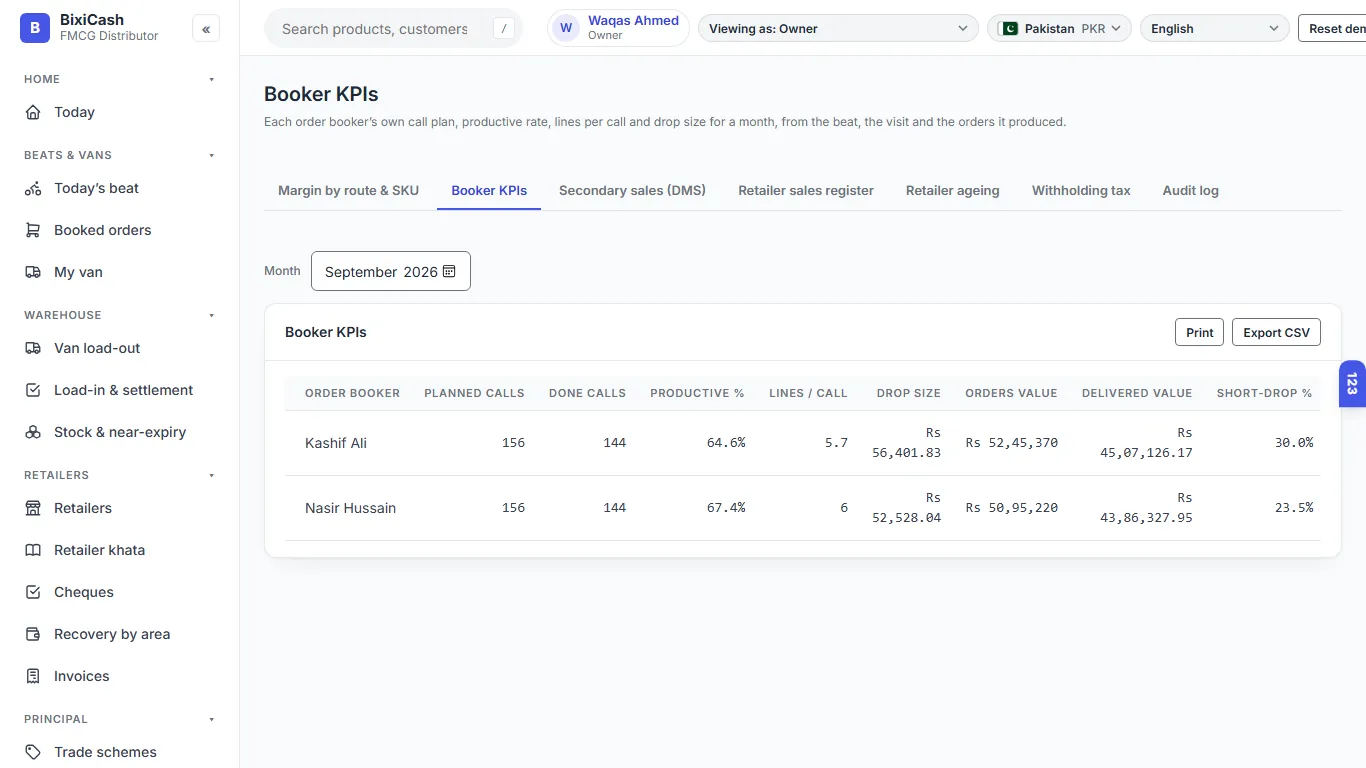
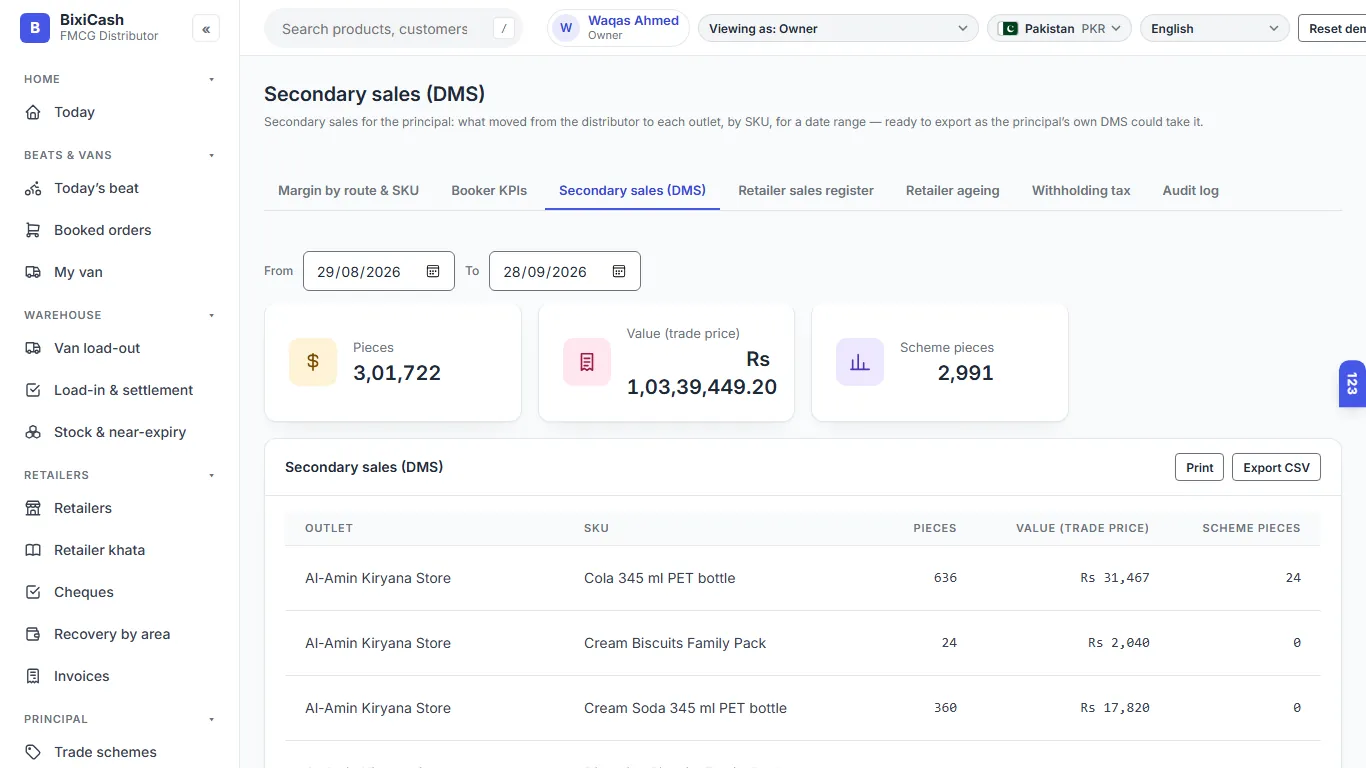
Planned and done calls, productive %, lines per call and drop size for every booker, and secondary sales by outlet for the principal's report.
Invoices carry the printed retail price for Third Schedule goods, and advance tax is tracked both ways: 236H collected from retailers and 236G paid to the principal. The driver sees the tax and 236H on each delivery before confirming it.
Planned: a small relay hub at the depot keeps load-out, load-in and invoicing going through an internet outage.
Planned: an Android app that keeps booking and delivering on beats with no signal. Today bookers and drivers use a mobile web screen that needs a connection.
Inside the product
Who uses it
Distributor owner
Route coverage, dues by area and near-expiry stock at a glance, and to approve a scheme before it goes out.
Order booker
Today's retailer list for the beat, with the active scheme worked out on the line, not worked out later.
Delivery driver
A loading sheet that matches what's actually on the van, and a fast way to confirm delivery and payment.
Recovery officer
A dues-by-area list that ages correctly, without chasing the warehouse for numbers.
Behind the counter
The screens for your trade sit on a full set of books. These parts come with it.
Double-entry books, statements, period close.
Cash, bank, cheques and reconciliation.
Orders, supplier bills and what you owe.
What you hold, where, and what it cost.
Quotations, orders, invoices, delivery notes.
One staff register, attendance, pay runs.
The numbers an owner asks for each morning.
More than one shop, one set of books.
On the counter
Bought together with the software: one delivery, one bill, set up to work.
The price
Introductory price. GST is added where it applies. A second shop costs the same as the first. Prices for India, in INR, as of 28 Sep 2026.
The first 50 shops in India get free setup and data import with a yearly plan, and today's price locked for two years.
Claim a placeStraight answers
Yes, in the demo. A scheme such as 12+1 or 5% off applies on the order line at booking, and the claim for principal-funded schemes is tracked until it is paid.
Yes. Load-in settles the van's stock and cash against what was loaded, sold, returned and collected, and any variance is posted with its reason.
Not yet. Today's booker and driver screens are mobile web screens that need a connection; an offline Android app is planned.
Yes. A retailer's khata tracks the open balance, receipts and ageing, the same engine as any customer account.
Near-expiry batches are flagged 45 days ahead in the distribution demo, so they go out first or are claimed back in time. Automatic earliest-expiry picking is shown in our pharmacy, traders and retail demos.
Yes. Planned and done calls, productive %, lines per call and drop size are shown by booker and by month.
Twenty minutes on a call. We show your day on the screen, with your words and your stock.