Opening
Stations set up
Stock is received, the karahi, tandoor, grill and drinks stations are prepped, and the floor is laid out before the doors open.

Live demo Food, Hospitality & Events
Seat a table, send each dish to the right kitchen station, and split the bill by seat, item or equal shares when the meal ends. One record carries the floor, the kitchen and the food cost, not three notebooks.
A working day
Opening
Stock is received, the karahi, tandoor, grill and drinks stations are prepped, and the floor is laid out before the doors open.
Lunch
Waiters seat a party, send the order with its modifiers to the right station, and a table with an office group splits its bill by seat.
Afternoon
The kitchen preps for the evening rush, a delivery rider comes and goes, and a takeaway token is called from the pickup board.
Dinner rush
The floor fills, each station's tickets carry an age timer, and the manager can see which dish is about to run out (86 it) before a guest is disappointed.
Close
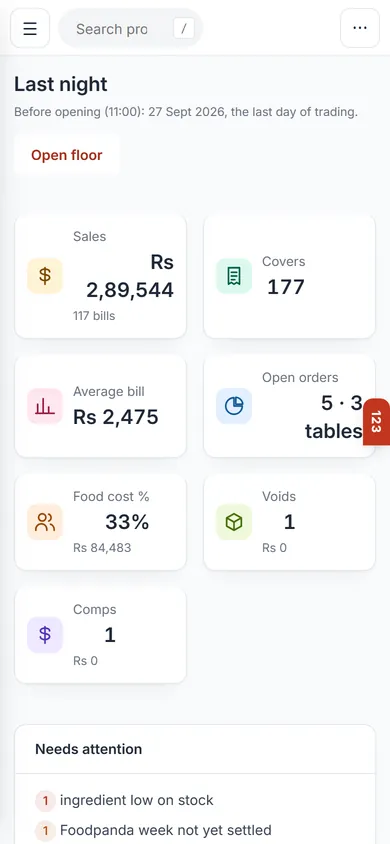
Waiters check out with their tips kept apart from the service charge, the till is counted down, and the manager reads tonight's food cost percentage.
What goes wrong today
The recipe behind a karahi or a biryani is known, but what it actually costs against tonight's price is usually a month-end surprise, not a daily number.
Splitting one table's bill by seat, by item or into equal shares is normally done on paper or in someone's head, with tax computed more than once by mistake.
A dish sent to the wrong station holds up a whole ticket, and there is no timer warning the kitchen before a table has already noticed.
A delivery-aggregator order is taken at the full price the guest paid, but what actually lands in the bank after commission is only visible once a week, and rarely matches the till's own count.
What it does
Parts marked Coming soon are on the way; founding shops get them first, at no extra charge.
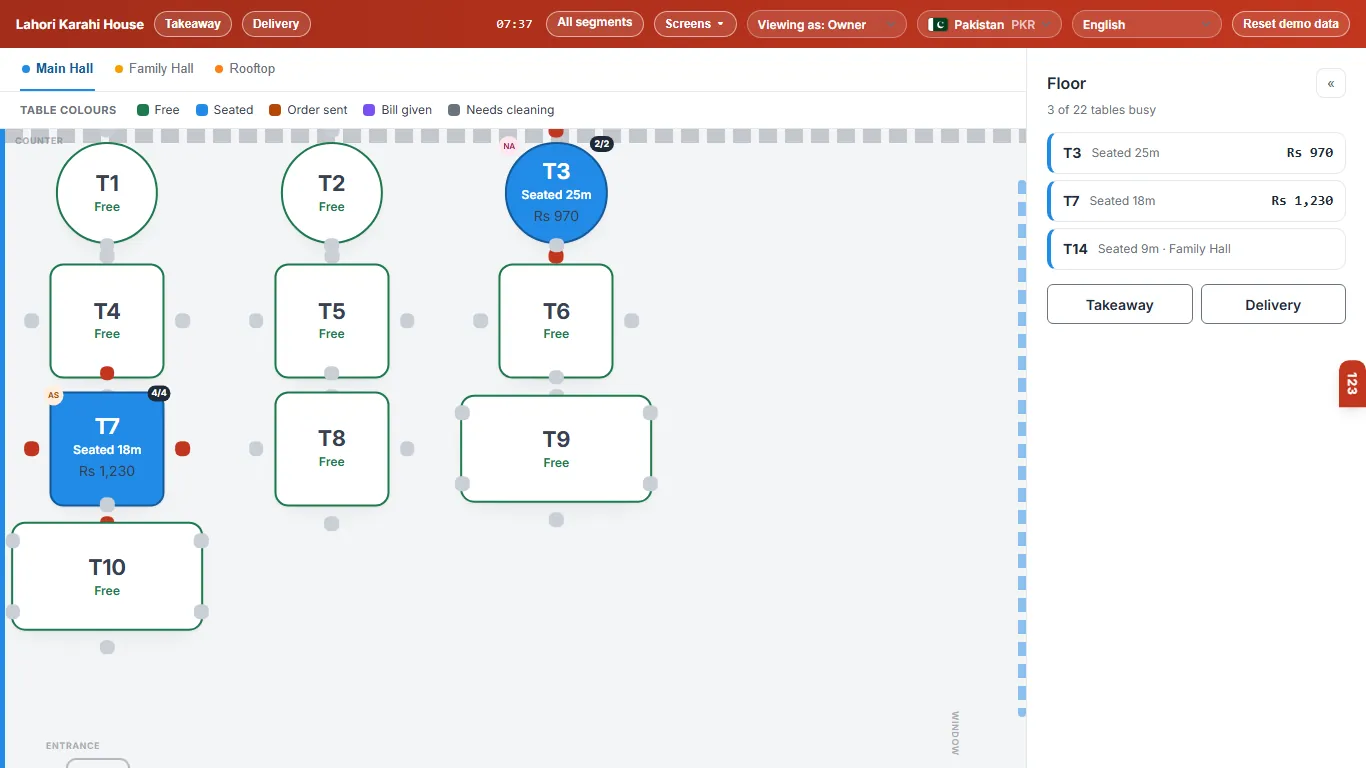
The demo shows every table's state — free, seated, ordered, food ready, bill printed, needing cleaning — at a glance, with seats and courses tracked per table.
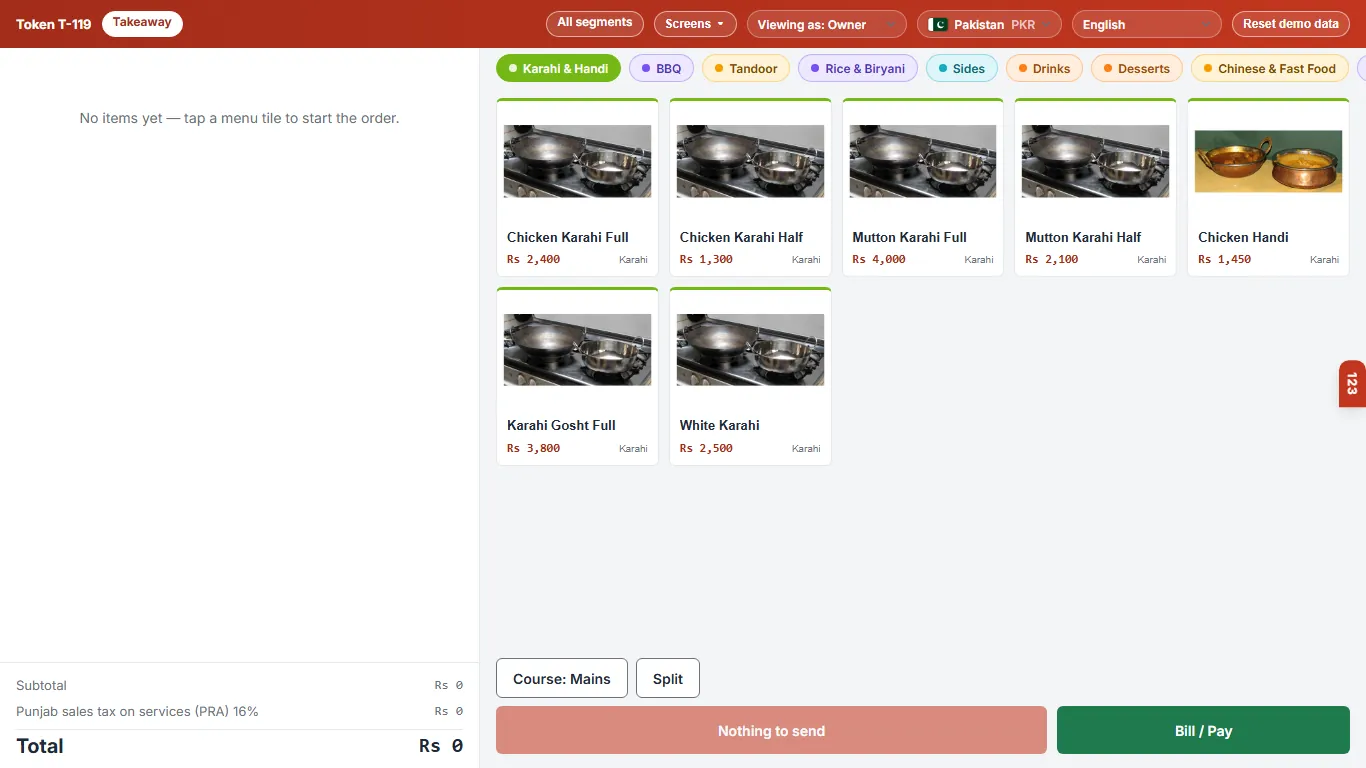
Extra cheese or no onion is shown in the demo as its own priced line with its own recipe cost, not a note the kitchen has to remember.
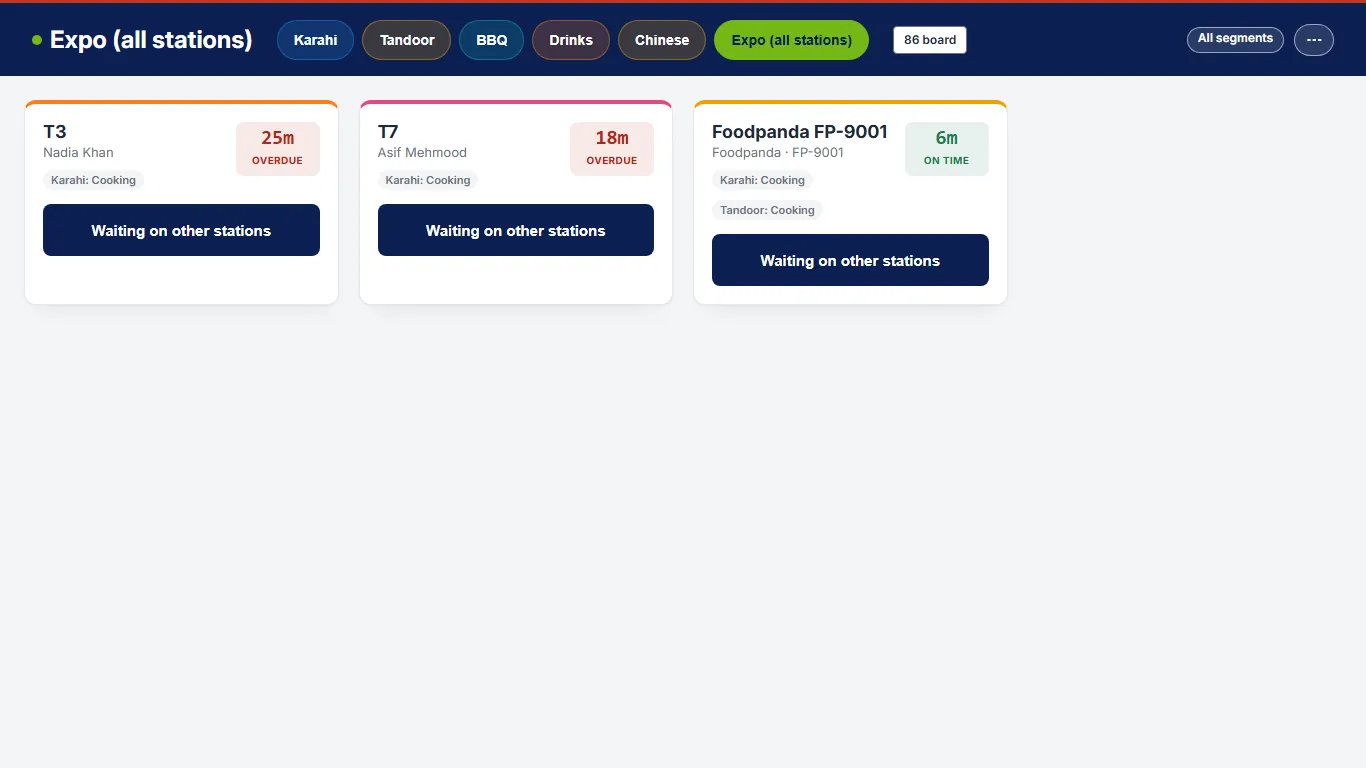
A sent dish reaches its own station's screen in the demo in under two seconds, so the karahi cook never sees a dessert ticket.
Splitting a table's bill by seat is tested in the demo; splitting one bill across several tenders at once is still a build target.
The demo picks the earliest-expiring batch of a perishable ingredient automatically and blocks stock that has already expired.
Every closed bill prints an itemised receipt from the same accounting record used for the books, not a separate receipt table.
Planned: a small on-site relay hub that keeps the floor and the kitchen screens working through an internet outage, so a busy Saturday night never stops at the router.
Inside the product
Who uses it
Owner
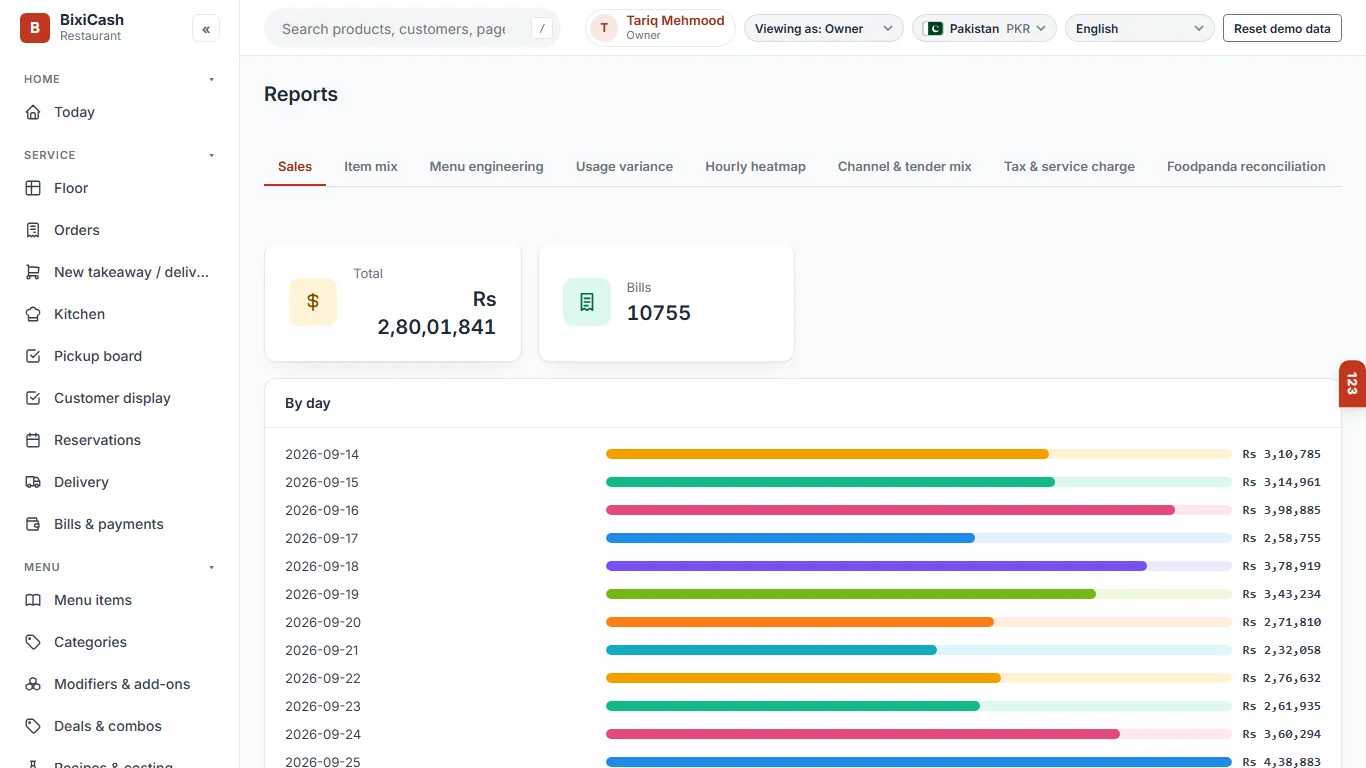
food cost, item mix and the trial balance in one place, not a separate notebook for the kitchen and another for the books
Manager
to see which table needs attention, which dish is running low, and to approve a void or a discount
Waiter
to seat, order and split a bill from the floor without walking back to a fixed till
Kitchen
the right ticket at the right station the moment it is sent, with modifiers and notes already on it
Behind the counter
The screens for your trade sit on a full set of books. These parts come with it.
Double-entry books, statements, period close.
Orders, supplier bills and what you owe.
What you hold, where, and what it cost.
Tax on every line, by your country's rules.
One staff register, attendance, pay runs.
Machines and vehicles, and their wear.
The numbers an owner asks for each morning.
More than one shop, one set of books.
On the counter
Bought together with the software: one delivery, one bill, set up to work.
The price
Introductory price. VAT is added where it applies. A second shop costs the same as the first. Prices for Sri Lanka, in LKR, as of 28 Sep 2026.
The first 50 shops in Sri Lanka get free setup and data import with a yearly plan, and today's price locked for two years.
Claim a placeStraight answers
Splitting a table's bill by seat is shown in the demo. Splitting one bill across several payment tenders at once is still being built.
The demo prices a dish from its recipe, including modifiers, so a food-cost percentage is available every day, not just at month end.
Not yet. A small on-site relay hub that keeps the till, floor and kitchen screens working through an outage is on the way.
Yes, shown in the demo — a sent dish reaches its own station's screen automatically, with an age timer so nothing sits forgotten.
Yes. The restaurant demo has its own books for the owner and manager: day book, ledgers and cash book, trial balance, profit and loss, balance sheet, tax summary and bank reconciliation, from the same record as the floor, kitchen and bills.
Twenty minutes on a call. We show your day on the screen, with your words and your stock.