Shift open
Tanks are read
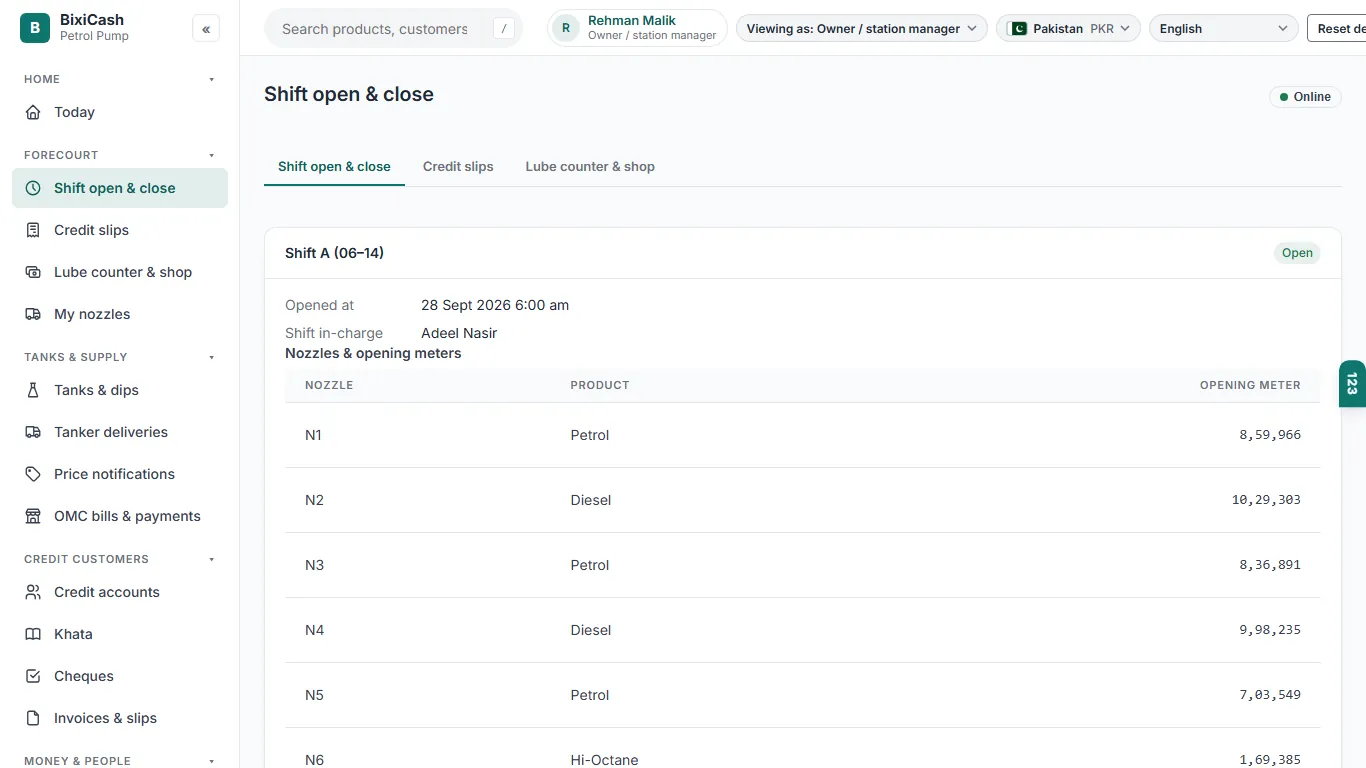
The shift in-charge takes a dip reading on every tank before the pumps open for the shift.

Live demo Automotive & Mobility
Every shift closes in three steps: meters by nozzle, dips against the tank chart, and cash by attendant. Price notifications carry the dealer margin, credit slips are written by vehicle, and a tanker is dipped before and after it decants.
A working day
Shift open
The shift in-charge takes a dip reading on every tank before the pumps open for the shift.
Through the day
Attendants dispense against the pump screen, and convenience-store items are sold alongside.
Shift close
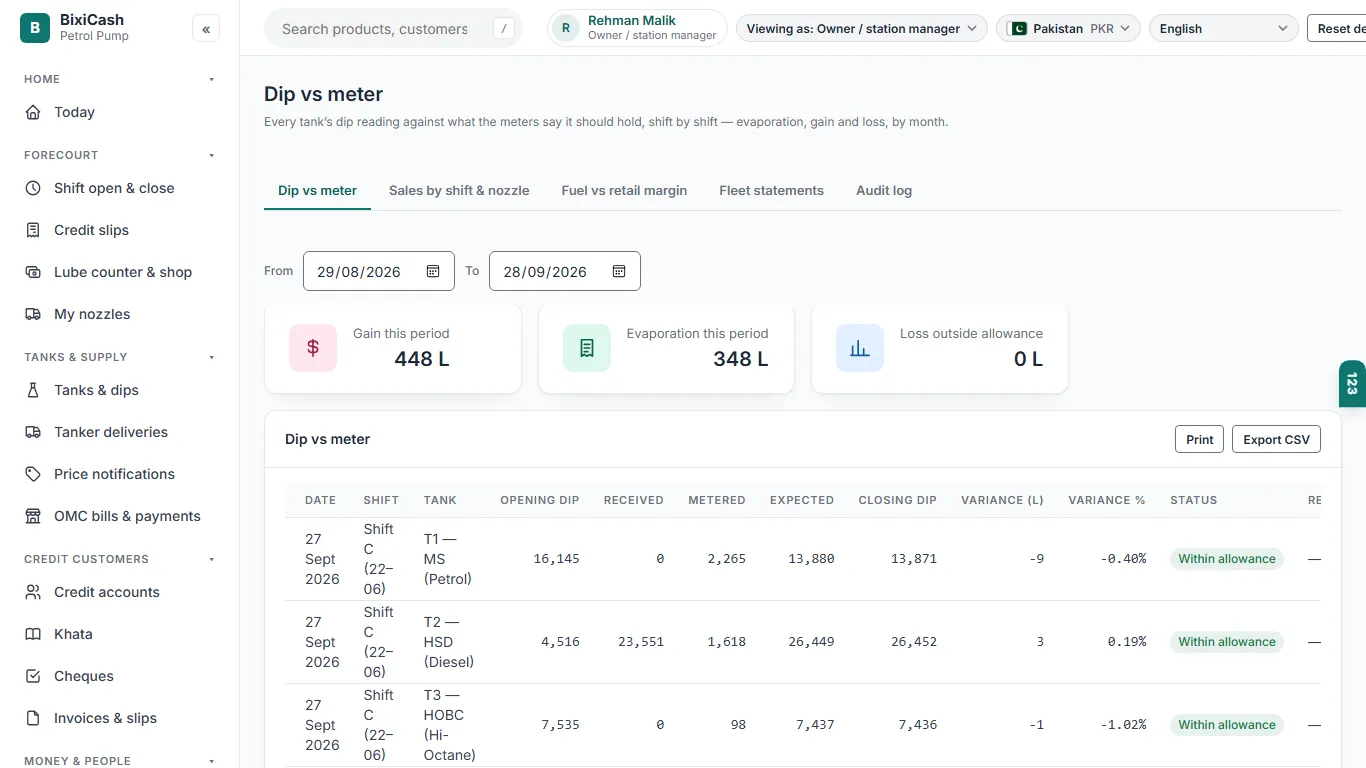
A closing dip reading is checked against the meter-calculated sales, and the cash is counted.
Same day
Any gap between dip and meter is recorded, not skipped, and investigated if it is outside the normal tolerance.
End of day
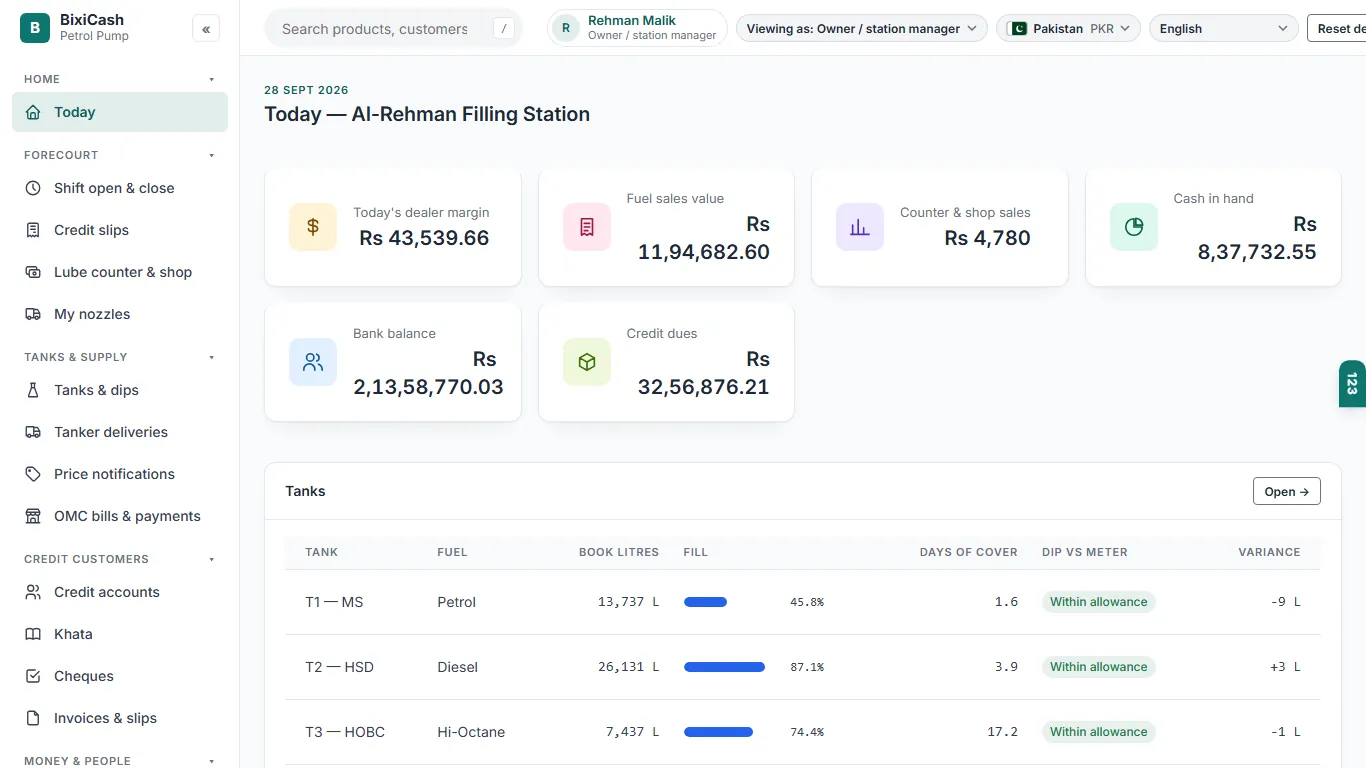
Daily margin, the variance report and fleet receivables are reviewed on one screen.
What goes wrong today
Without a routine dip-versus-meter check at every shift close, a real shortage can go unnoticed for weeks.
The dealer margin is the gap between the retail price and the depot cost; working it out manually invites mistakes.
A fuel card's usage that isn't reconciled to the monthly bill leaves both sides guessing who owes what.
When the retail price changes overnight, the fuel already sitting in the tank needs revaluing in one clean action, not a scramble.
What it does
Parts marked Coming soon are on the way; founding shops get them first, at no extra charge.
Each shift closes with the meter on every nozzle, a dip on every tank read against its tank chart, and the cash counted for each attendant against what their nozzles sold.
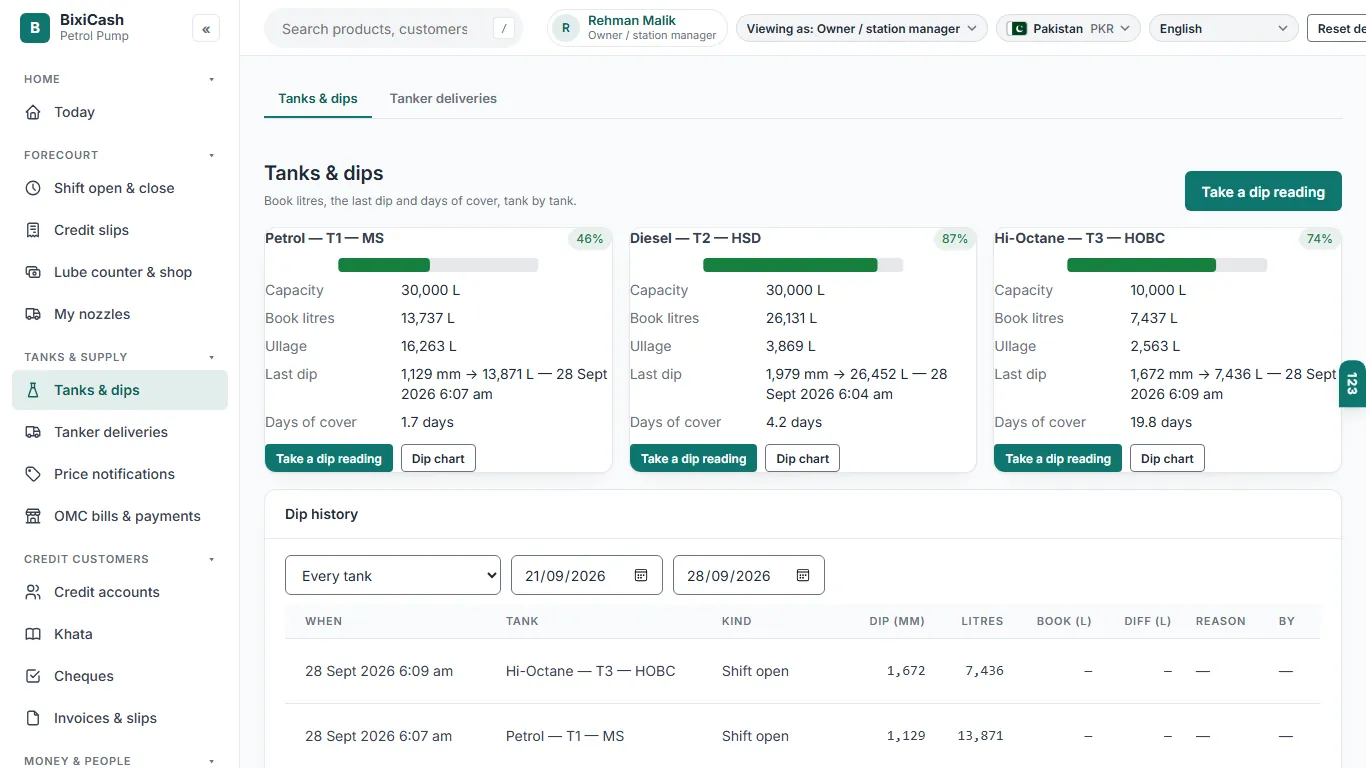
Every tank shows its book litres, fill level and days of cover, and the dip-against-meter report splits any difference into gain, evaporation and loss against the allowance.
Dip before, decant, dip after: the litres received are checked against the oil company's invoice.
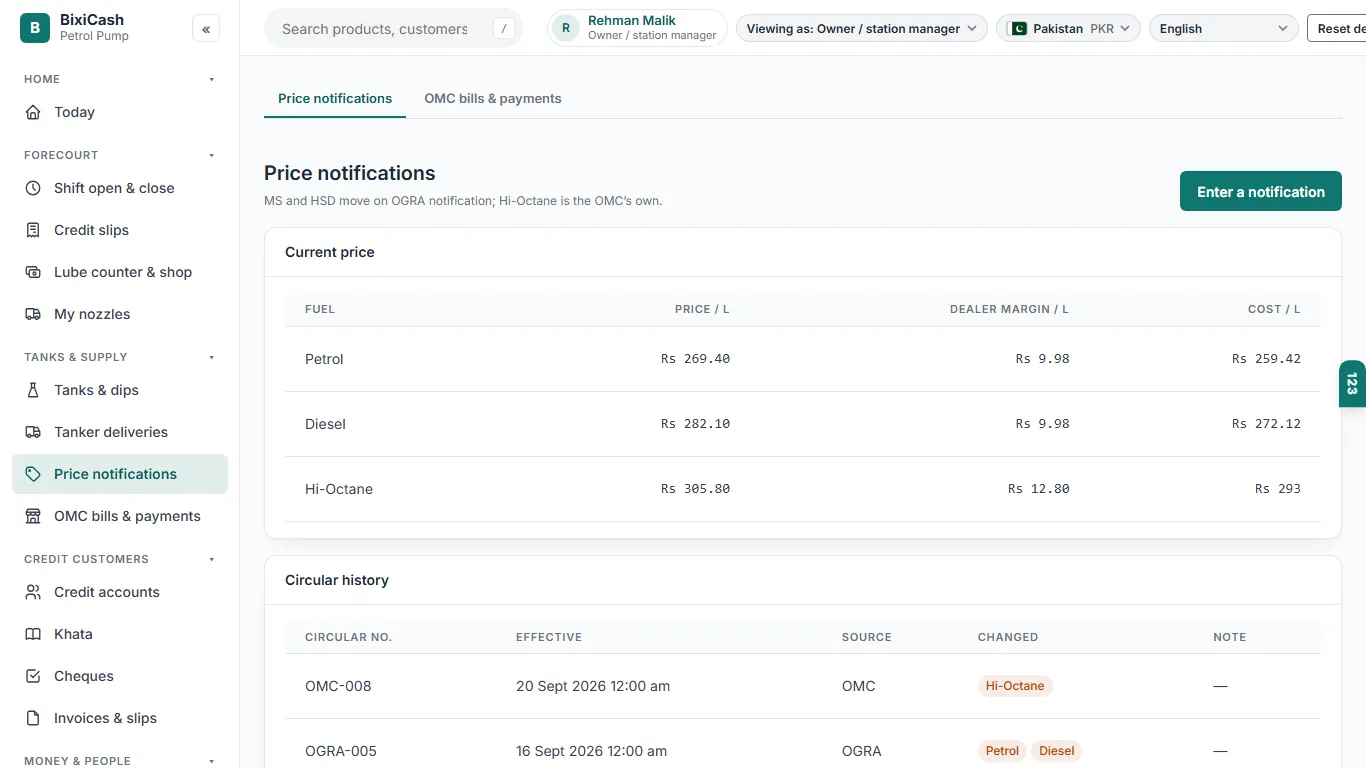
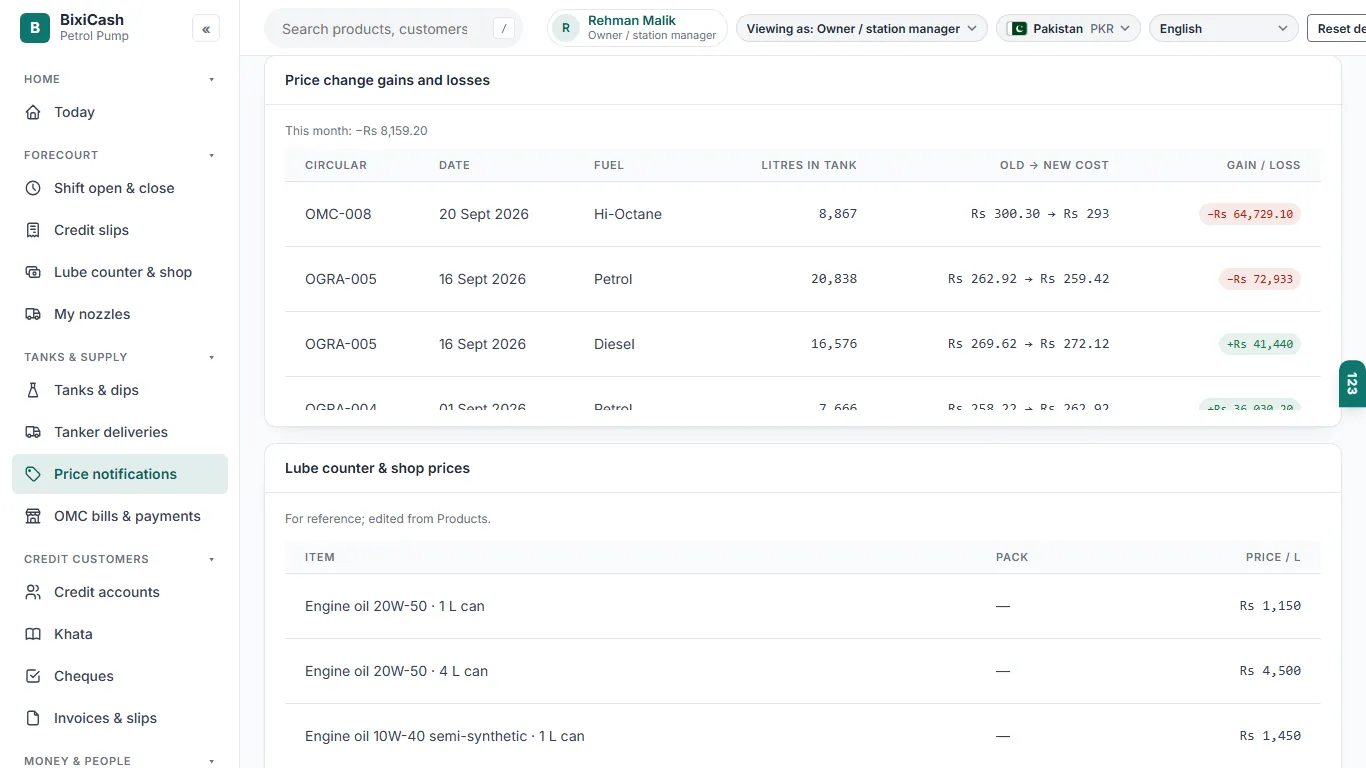
Each OGRA or oil-company price notification sets the pump price and the dealer margin from the moment it takes effect, and every sale keeps the price in force when it was made.
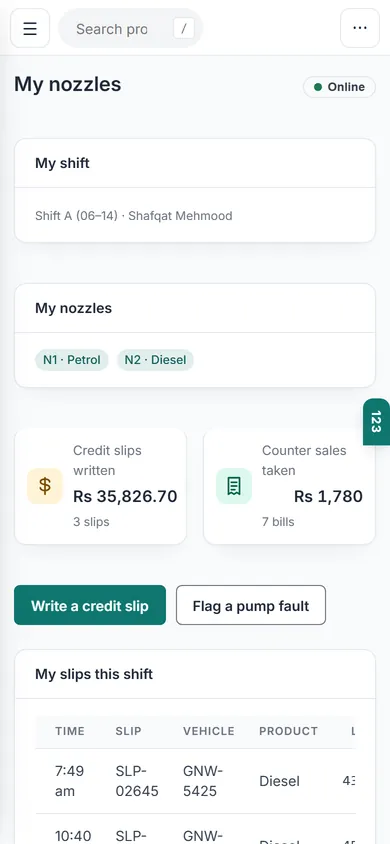
An attendant writes the credit slip on their own phone, for their own nozzles, and each fleet account's monthly statement is subtotalled by vehicle.
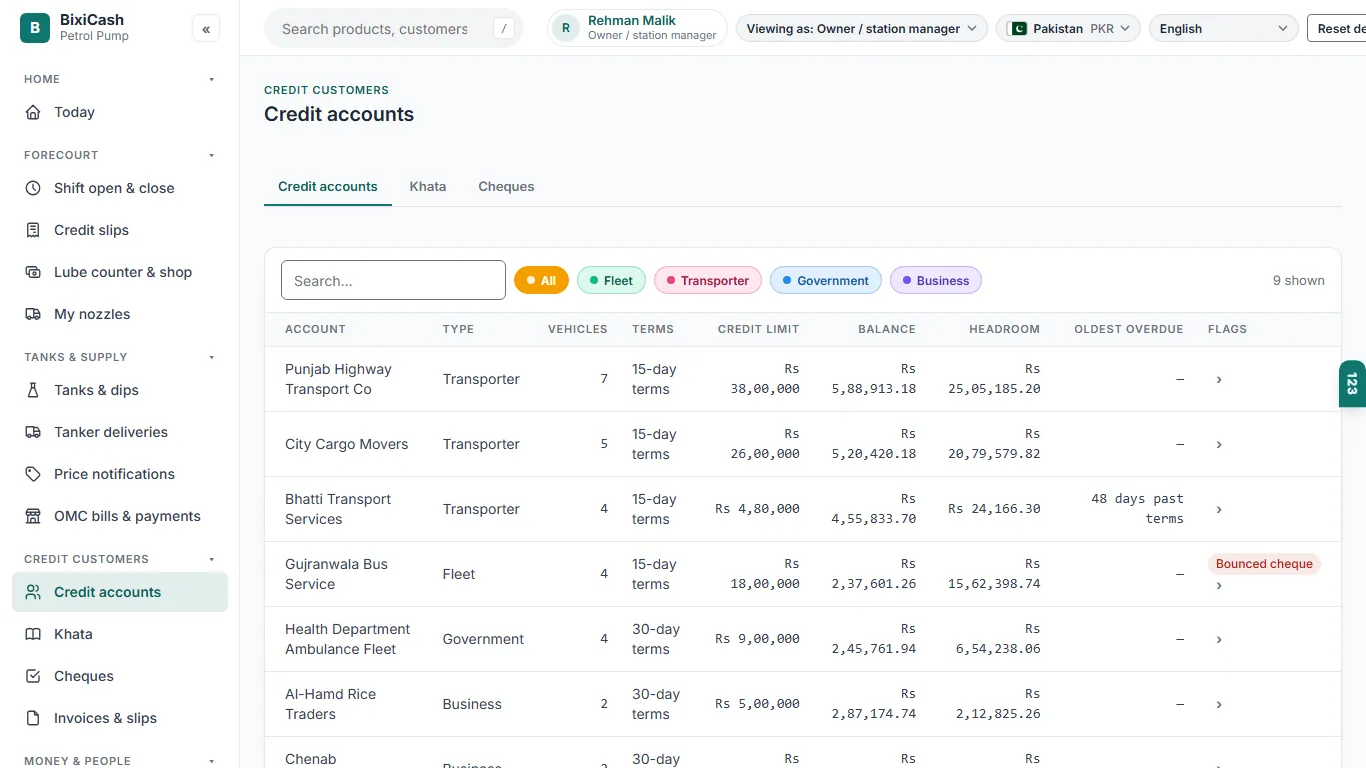
Transporters, fleets and government departments buy on account, with open invoices, cheques and ageing behind every balance.
Lubricants and shop items sell at their own counter, and their margin is reported apart from the fuel margin.
The petroleum levy sits inside the notified fuel price, so no sales tax is added on fuel. The lube counter and shop charge 18%, and a fuel dealer is exempt from 236H.
A small on-site relay hub will keep the pump and shift screens taking sales through an internet outage.
When a price notification takes effect, the fuel already in the tanks is revalued at the new cost, and the gain or loss is posted to its own line in the books, with a total for the month.
Inside the product
Who uses it
Pump attendant
a simple screen to dispense and take payment
Shift in-charge
a dip reading at open and close, checked against the meter, with a cash count that matches
Owner
the dealer margin, the tank variance and fleet receivables, without doing the sums by hand
Behind the counter
The screens for your trade sit on a full set of books. These parts come with it.
Double-entry books, statements, period close.
Cash, bank, cheques and reconciliation.
Orders, supplier bills and what you owe.
What you hold, where, and what it cost.
Quotations, orders, invoices, delivery notes.
Tax on every line, by your country's rules.
One staff register, attendance, pay runs.
Machines and vehicles, and their wear.
The numbers an owner asks for each morning.
More than one shop, one set of books.
On the counter
Bought together with the software: one delivery, one bill, set up to work.
The price
Introductory price. VAT is added where it applies. A second shop costs the same as the first. Prices for Saudi Arabia, in SAR, as of 28 Sep 2026.
The first 50 shops in Saudi Arabia get free setup and data import with a yearly plan, and today's price locked for two years.
Claim a placeThis trade does not have its own price line yet. The price shown is our retail line, and we confirm it when we quote.
Straight answers
It is set by notification and changes with it, so we do not publish one number. Each price notification you enter carries its own dealer margin, and the margin report works it out per litre.
Yes. When a notification takes effect, the fuel in the tanks is revalued at the new cost, and the gain or loss is posted to its own line in the books, with a month total.
Yes. Every credit slip carries the vehicle number, and the monthly fleet statement is subtotalled by vehicle, so it ties to the fleet's own records.
Not yet checked in detail; CNG needs its own regulatory pass before we say more.
Not yet. It is planned: a small on-site relay hub that keeps the pumps selling through an outage, which matters for a 24-hour station.
Yes. Each attendant sees only their own nozzles on their phone, writes the credit slip there, and can flag a pump fault for the manager.
Dip before, decant, dip after. The litres received are compared with the oil company's invoice, so a short delivery shows up against that bill.
Twenty minutes on a call. We show your day on the screen, with your words and your stock.