Morning
A car arrives
The advisor opens a job card by plate or QR, notes the complaint and the odometer, and pulls up the vehicle's past visits.

Live demo Automotive & Mobility
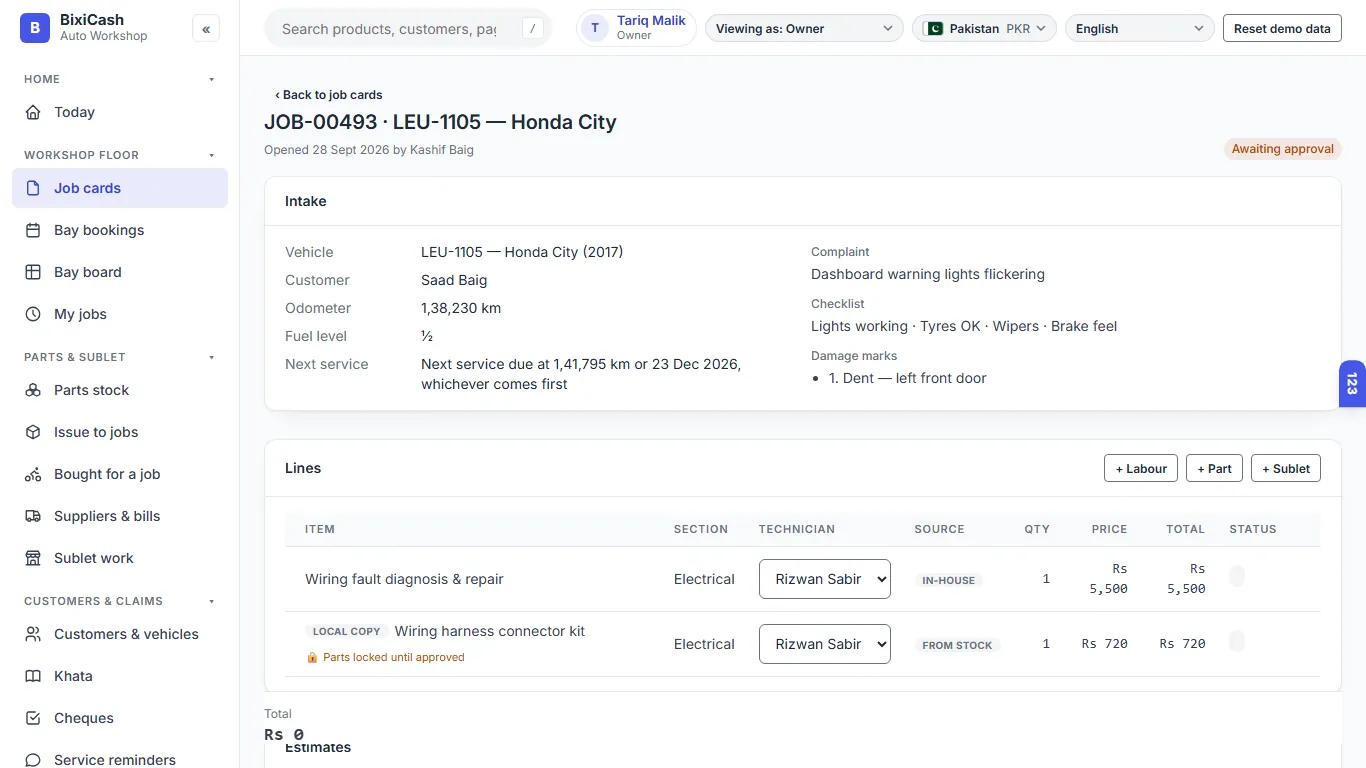
A car's job runs from job card to estimate to approval to bay to invoice. Intake records the odometer, fuel, checklist and damage marks, parts stay locked until the customer approves, and every technician's clocked hours sit against the hours billed.
A working day
Morning
The advisor opens a job card by plate or QR, notes the complaint and the odometer, and pulls up the vehicle's past visits.
Mid-morning
An estimate is sent for approval before parts are drawn from the store; nothing is charged until the customer has agreed to it.
Midday
The mechanic starts, pauses and finishes the job on a tablet, and requests parts by scanning them, never from memory.
Afternoon
If more work turns up mid-job, it goes back for its own approval instead of being added to the bill quietly.
Evening
Labour and parts are billed as separate lines, parts at their real cost, and the car is released against payment.
What goes wrong today
A part goes out of the store against nothing more than a mechanic's word, so stock and job cost drift apart.
Supplementary work found mid-job gets added silently instead of going back to the customer for its own approval.
A paper bay board lets a job get claimed twice, or lost, with no record of who actually did the work.
The books often show one number for a job instead of labour and parts at real cost, so margin by job type is a guess.
What it does
Parts marked Coming soon are on the way; founding shops get them first, at no extra charge.
Intake records the odometer, fuel level, a checklist and damage marks on the car. The estimate goes on WhatsApp, its parts stay locked until the customer approves, and the approved job becomes the invoice.
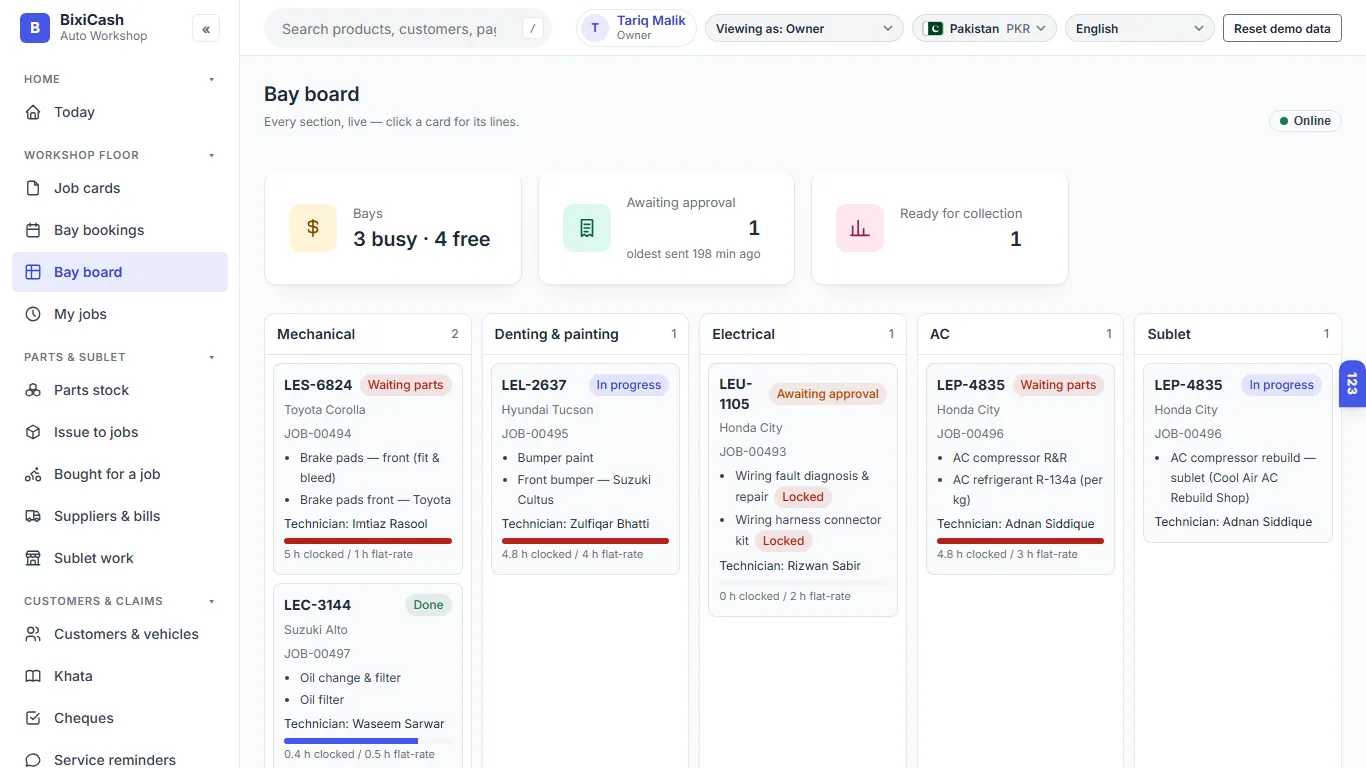
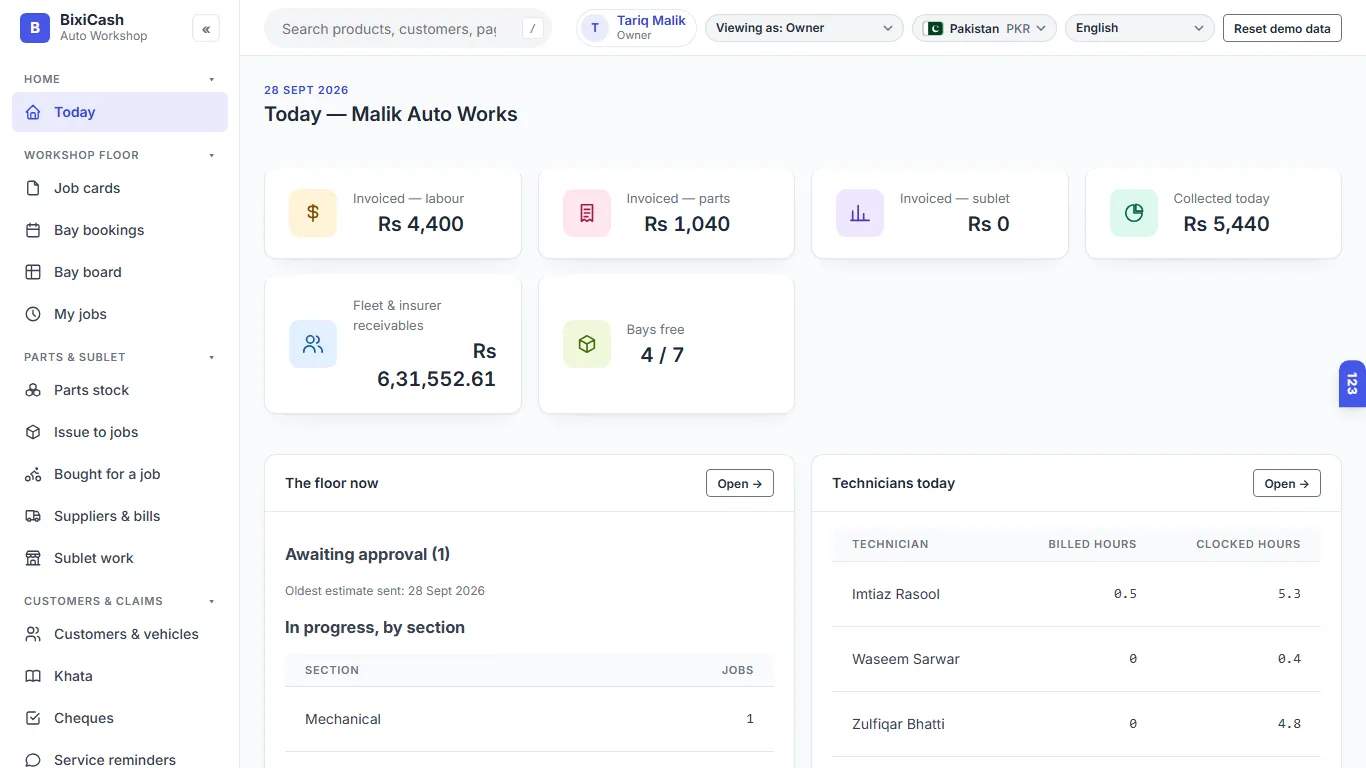
Mechanical, denting and painting, electrical, AC and sublet each show their bays, the job in each, its technician, and whether it waits for parts or approval.
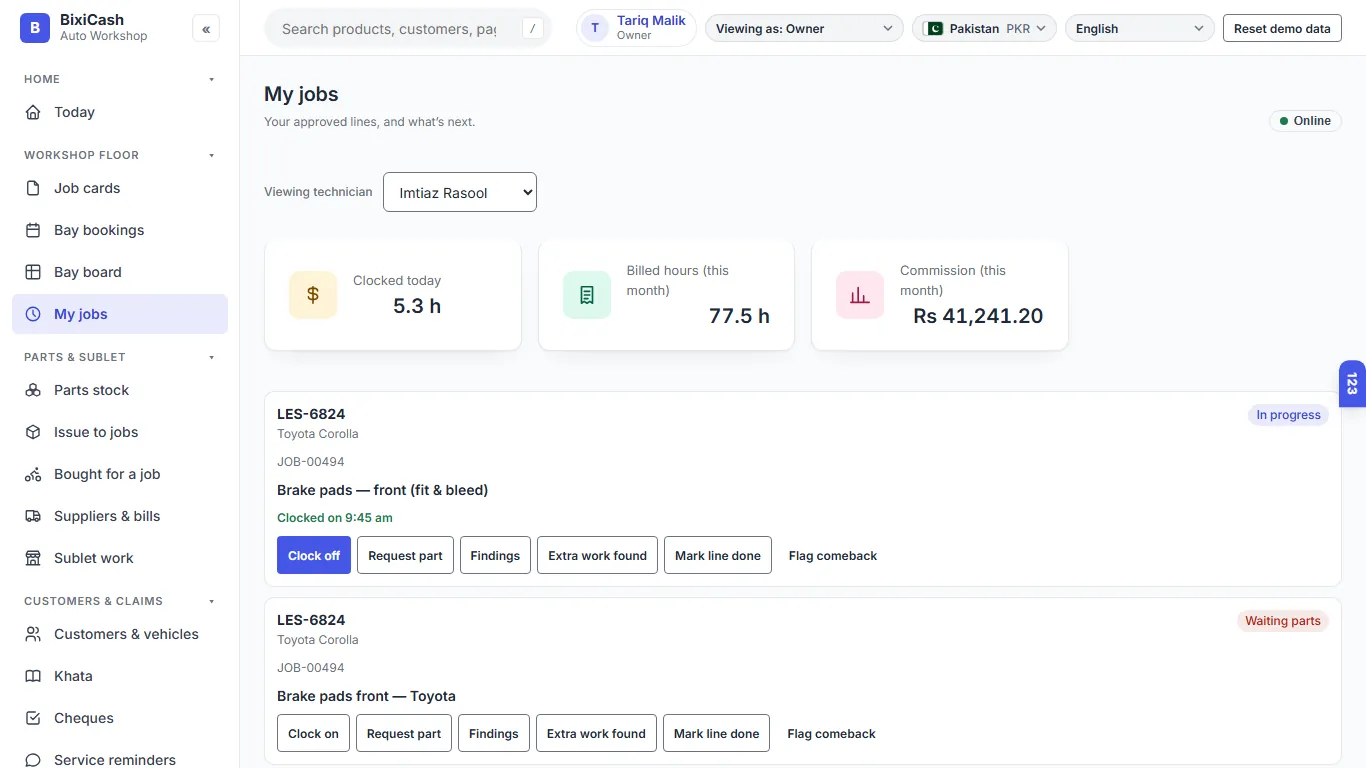
Technicians clock on and off each job, request parts, note findings and extra work found, and flag a comeback.
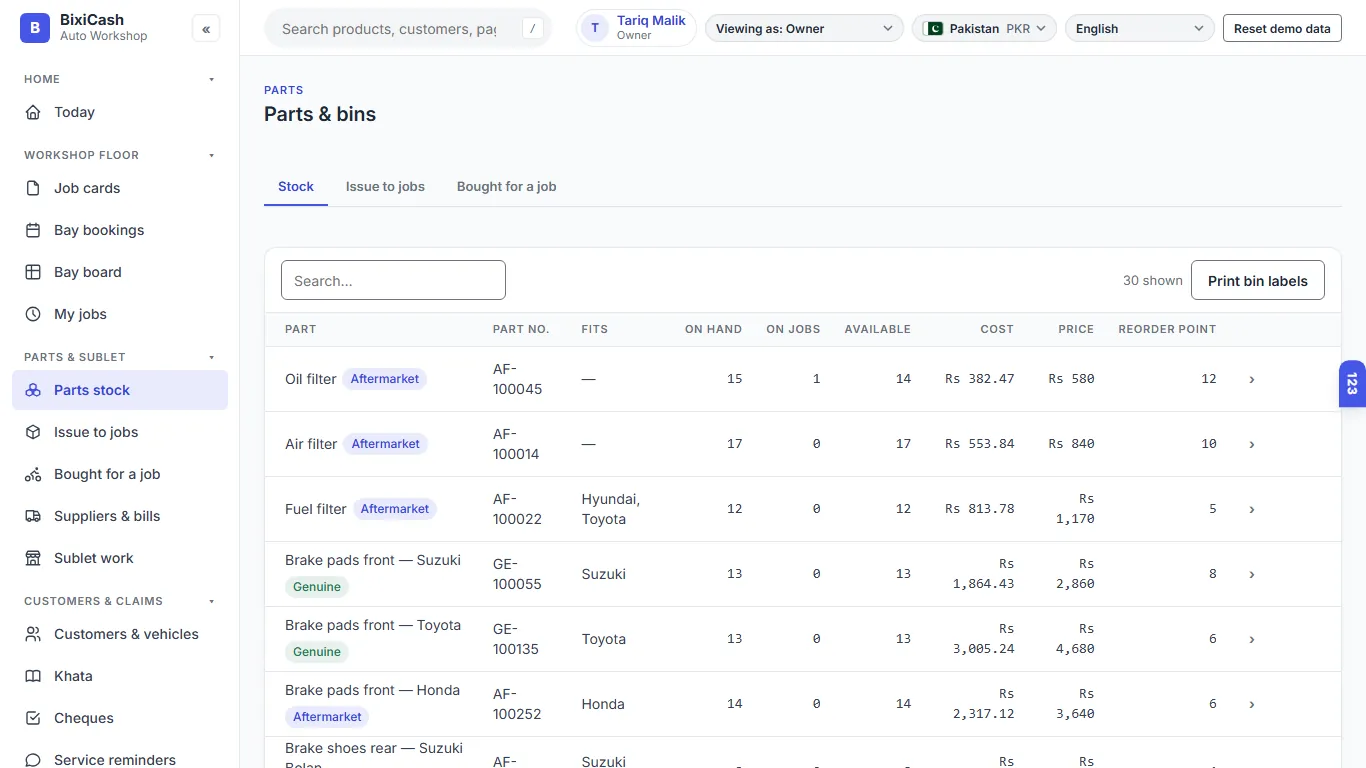
Parts stock shows what fits which car and what is already on jobs. Parts are issued to a job, and a part bought for a job is recorded against it.
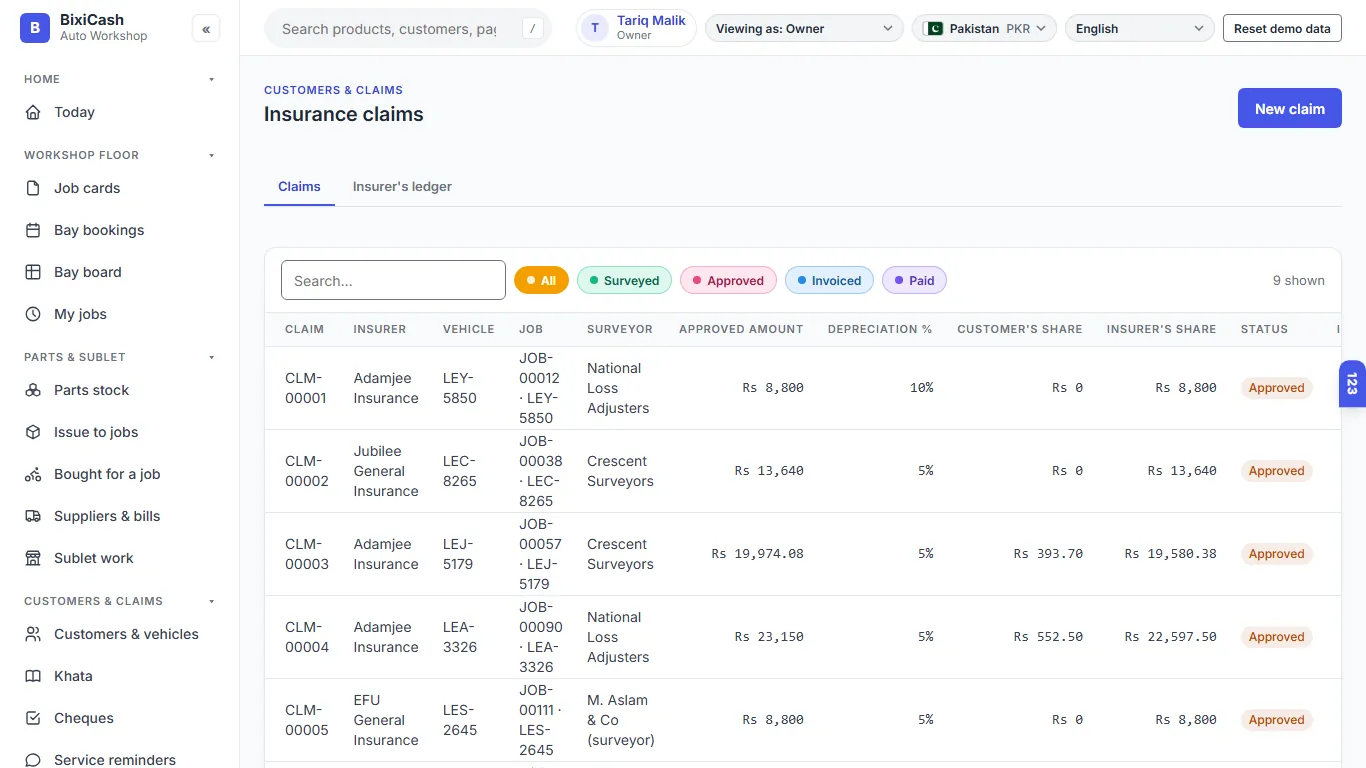
The insurer is billed apart from the customer's depreciation share, with the surveyor and the approved amount on every claim.
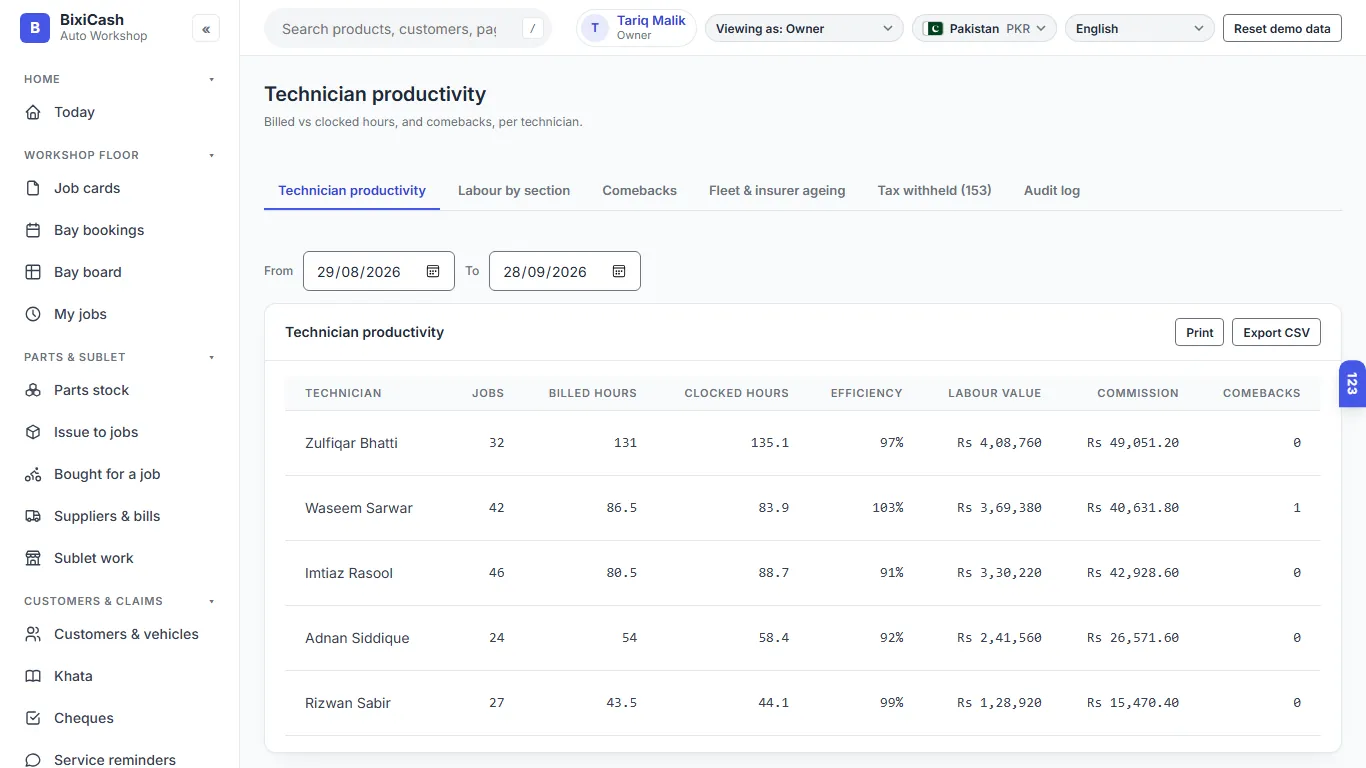
Billed against clocked hours for every technician, labour by section, comebacks, and the commission earned.
The next service falls due by distance or date, whichever comes first, and the reminder goes out on WhatsApp.
A courier or corporate fleet account can be billed on account, with open invoices and ageing behind the balance.
18% sales tax on parts and the provincial tax on labour (Punjab's reduced 5%, or 16% standard by a switch) sit on the same invoice, and section 153 tax withheld by a fleet customer is recorded as claimable.
Planned: the counter keeps taking payments through an internet outage, through a small on-site relay hub.
Inside the product
Who uses it
Service advisor
one screen for the job card, the estimate and the customer's WhatsApp approval
Mechanic
a bay board that never lets two mechanics claim the same job, and parts by a scan, not a memory
Storekeeper
every part issued against a job reference, and a reorder point before stock runs out
Owner
labour and parts revenue as separate numbers, and a customer's full history one click away
Behind the counter
The screens for your trade sit on a full set of books. These parts come with it.
Double-entry books, statements, period close.
Cash, bank, cheques and reconciliation.
Orders, supplier bills and what you owe.
What you hold, where, and what it cost.
Quotations, orders, invoices, delivery notes.
Tax on every line, by your country's rules.
One staff register, attendance, pay runs.
Machines and vehicles, and their wear.
The numbers an owner asks for each morning.
On the counter
Bought together with the software: one delivery, one bill, set up to work.
The price
Introductory price. Local taxes are added where they apply. A second shop costs the same as the first. Prices for countries without their own page, in USD, as of 28 Sep 2026.
The first 50 shops in each country get free setup and data import with a yearly plan, and today's price locked for two years.
Claim a placeThis trade does not have its own price line yet. The price shown is our retail line, and we confirm it when we quote.
Straight answers
Yes. Extra work found on the job goes back to the customer as its own estimate, and its parts stay locked until it is approved.
That is not yet decided; today it is left to the advisor's judgement rather than a fixed setting.
Planned: past invoices, checklists and repeat issues, found by plate or QR, one lookup away.
A fleet account can be billed on khata with ageing; a walk-in customer usually pays at invoice.
Not yet. It is planned: a small on-site relay hub that keeps the counter selling through an outage.
Yes. Each technician clocks on and off their own jobs, requests parts and records findings on a tablet.
The insurer is billed for its share and the customer pays the depreciation share, on the same job.
Twenty minutes on a call. We show your day on the screen, with your words and your stock.