Morning
A lot is bought
A truck of wheat, maize or paddy arrives. The munshi weighs and grades it, and it lands in godown stock at cost.

Coming soon Agriculture & Livestock
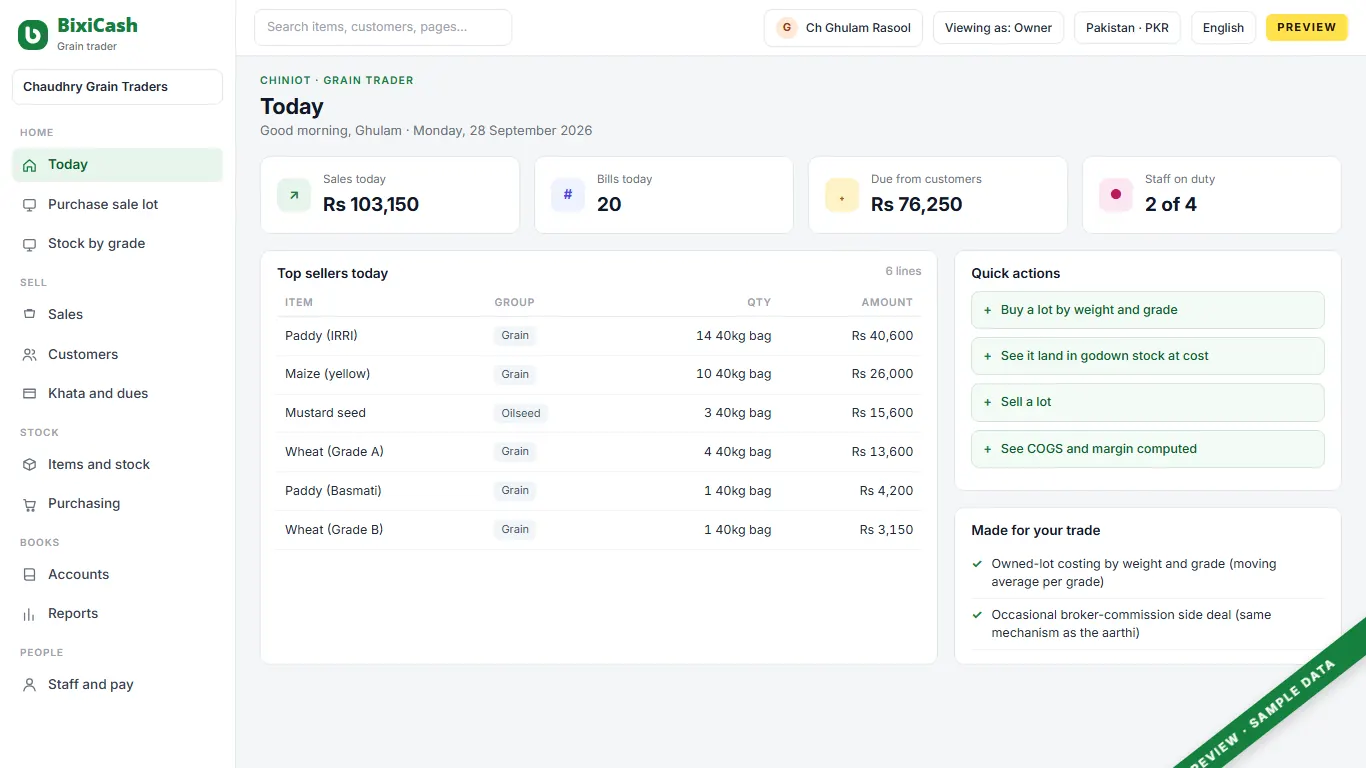
For a grain trader or beopari: buy a lot by weight and grade, see it land in godown stock at cost, and sell it later at a margin the screen works out by grade, not a guess held over to month end.
A working day
Morning
A truck of wheat, maize or paddy arrives. The munshi weighs and grades it, and it lands in godown stock at cost.
Through the day
The godown keeper checks quantity on hand by grade before quoting a buyer.
Afternoon
A buyer takes a lot at the day's sell rate. The design works out cost of goods sold and margin by grade on the same screen.
Evening
The owner checks margin by lot, buyer ageing and cash position; a periodic stock take by grade reconciles the books separately.
What goes wrong today
Two grades of the same commodity, like Basmati and IRRI paddy, are easy to blend into one stock figure by mistake.
Without a moving-average cost by grade, the real margin on a lot is a guess until the books are closed.
Stock takes turn up shortages that nobody ties back to a specific lot or cause.
Credit sales to mills and wholesalers on terms of a few weeks are hard to chase without a proper ageing list.
What it does
Parts marked Coming soon are on the way; founding shops get them first, at no extra charge.
A purchase will land in godown stock at cost by grade, using a moving average, so a sale shows the real margin, not an estimate.
An occasional deal brokered without holding stock will use the same commission mechanism as the mandi aarthi.
Stock is tracked by warehouse and location; showing every godown together in one consolidated view is still being wired up.
A physical count reconciles against the books, with a reason recorded for any variance.
A mill or wholesaler buying on credit gets a running account with proper ageing.
What is owed to a farmer or supplier for a lot is tracked as an open item until paid.
A click-to-chat message can carry a rate alert or a dues reminder; a person still presses send.
Who uses it
Owner
to see margin by lot, buyer ageing and cash position without waiting for month end
Munshi (accountant)
to post a purchase or sale by weight and grade and trust the cost and margin it shows
Godown keeper
to see quantity on hand by grade and log a stock-take variance from a tablet in the godown
Loader
no system access, only to move stock as directed
Behind the counter
The screens for your trade sit on a full set of books. These parts come with it.
Double-entry books, statements, period close.
Orders, supplier bills and what you owe.
What you hold, where, and what it cost.
The numbers an owner asks for each morning.
More than one shop, one set of books.
On the counter
Bought together with the software: one delivery, one bill, set up to work.
The price
Introductory price. Local taxes are added where they apply. A second shop costs the same as the first. Prices for countries without their own page, in USD, as of 28 Sep 2026.
The first 50 shops in each country get free setup and data import with a yearly plan, and today's price locked for two years.
Claim a placeThis trade does not have its own price line yet. The price shown is our retail line, and we confirm it when we quote.
Straight answers
That's the plan: stock, cost and margin will all be kept by grade, not just by commodity name. It isn't built yet.
Not yet. A sale will show cost of goods sold and margin by grade the moment it posts, using moving-average cost.
Yes. Stock is tracked by warehouse and location today, across as many godowns as you run.
Yes, counting stock and posting the variance against the books is built into the product.
Not yet. The plan is to use the same commission mechanism the aarthi uses, for the occasional deal a beopari brokers without holding stock.
Twenty minutes on a call. We show your day on the screen, with your words and your stock.