Morning
Hides arrive and are graded
Incoming hides are weighed and graded, and the batch begins its stage-by-stage record.

Coming soon Manufacturing & Process
Grade a hide at intake, track its cost stage by stage from soak to finish, and see the yield and grade it comes out as.
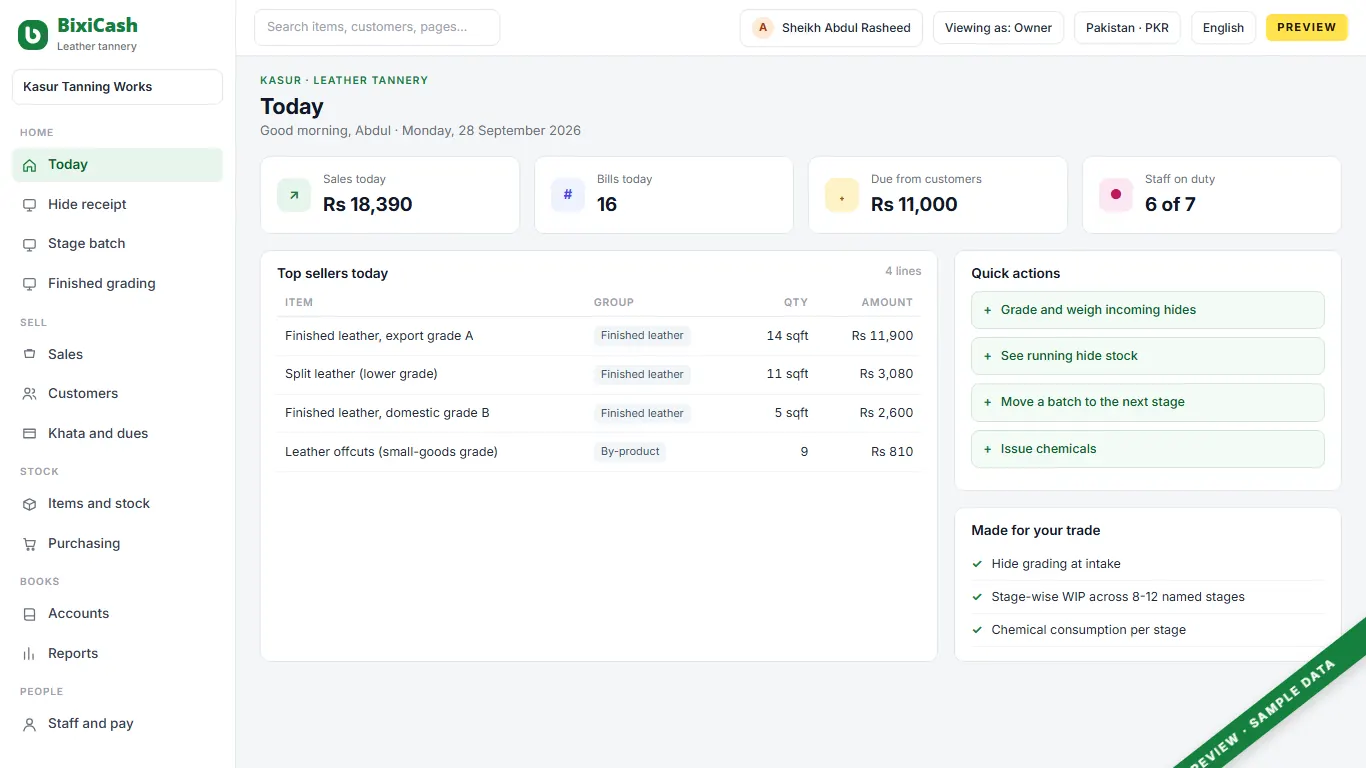
A working day
Morning
Incoming hides are weighed and graded, and the batch begins its stage-by-stage record.
Midday
Each stage moves the batch forward, with the chemicals it uses recorded against it.
Afternoon
Later stages add cost the same way, so the batch's build-up never leaks between batches.
Late afternoon
QC grades the output by square foot, ready for a domestic buyer or an export order.
Evening
A domestic sale runs on khata; an export order is packed with the documents a buyer expects.
What goes wrong today
Soak, lime, tan, dye and finish each add cost, and it is easy to lose track of where a batch's true cost stands.
A hide rejected or downgraded partway through needs its cost handled without breaking the whole batch.
Certificates and documentation for an export order today live in someone's memory, not the system.
Without a per-stage record, the real chemical cost behind a batch is a guess.
What it does
Parts marked Coming soon are on the way; founding shops get them first, at no extra charge.
Domestic buyers can order against a running khata account; the accounts track open invoices, receipts and ageing behind the balance.
A hide or chemical purchase order flows through to goods receipt and then a supplier bill.
Planned: record a hide's grade and weight the moment it arrives, driving what it is worth to the batch.
Planned: a batch moves through soak, lime, tan, dye and finish as its own tracked record, with chemical use added at each stage and no cost leaking between batches.
Planned: an export order carries the document set a buyer expects, attached to the invoice.
Every receipt carries an FBR-style invoice number and QR code. The live FBR connection is coming soon.
Who uses it
Owner
margin by grade and the hide-to-finished-leather yield
Hide grader
to grade and weigh incoming hides against a running hide stock
Stage supervisor
to move a batch forward and record chemical use, without seeing other stages' detail
QC / export officer
to grade finished output and prepare export documents
Behind the counter
The screens for your trade sit on a full set of books. These parts come with it.
Double-entry books, statements, period close.
Orders, supplier bills and what you owe.
What you hold, where, and what it cost.
Tax on every line, by your country's rules.
The numbers an owner asks for each morning.
On the counter
Bought together with the software: one delivery, one bill, set up to work.
The price
Introductory price. Local taxes are added where they apply. A second shop costs the same as the first. Prices for countries without their own page, in USD, as of 28 Sep 2026.
The first 50 shops in each country get free setup and data import with a yearly plan, and today's price locked for two years.
Claim a placeThis trade does not have its own price line yet. The price shown is our retail line, and we confirm it when we quote.
Straight answers
Planned: a stage-by-stage batch record from soak to finish, with chemical use added at each stage.
Planned: the downgrade is handled without breaking the batch's own costing.
Planned: an export pack of documents attached to the order.
We have not confirmed the exact regulatory requirement for this area; today you can record it as an ordinary monthly expense.
Local buyers can already run on a khata account; an export sale against a letter of credit needs its own documents attached to the invoice, which is still being designed.
Same aisle
Twenty minutes on a call. We show your day on the screen, with your words and your stock.